Oral cancer screening is a quick, painless examination that can detect cancer and precancerous conditions in their earliest, most treatable stages. At Dental Sedation Ottawa, we perform thorough oral cancer screenings as part of every comprehensive dental exam, and we can accommodate anxious patients through sedation options—ensuring everyone receives this potentially life-saving preventive service without fear or discomfort.
Every hour, someone in North America dies from oral cancer—approximately 4,750 Canadians are diagnosed annually, and sadly, one Canadian dies from oral cancer every day. The disease can affect the lips, tongue, cheeks, floor of mouth, hard and soft palate, sinuses, and throat. Early detection dramatically improves survival rates, yet oral cancer often goes unnoticed by patients until advanced stages.
Here's the crucial difference early detection makes: When caught in its earliest stage (Stage I), oral cancer has an 80-90% five-year survival rate. However, most oral cancers are discovered at Stage III or IV when survival rates plummet to 30-40%. Late detection often requires disfiguring surgery, radiation, chemotherapy, and still carries poor outcomes.
Regular oral cancer screenings by dental professionals catch abnormalities early—often before patients notice any symptoms. Many precancerous conditions show visible changes dentists recognize immediately. Identifying and treating these lesions before they become cancerous can prevent cancer entirely.
The good news: oral cancer screening takes just 2-3 minutes, is completely painless, and can literally save your life. The Canadian Dental Association recommends oral cancer screening at every dental exam—typically every six months for most patients.
At our Ottawa dental clinic, we understand that any medical screening can trigger anxiety—whether from fear of findings, past trauma, or general dental phobia. We make oral cancer screening comfortable and accessible through evidence-based sedation dentistry options tailored to your needs.
Mild relaxation for patients with minimal anxiety. You stay fully awake, breathe normally, and effects wear off within minutes. Perfect for routine screenings during regular exams. Learn more about nitrous oxide
Medication taken before your appointment creates drowsiness and reduces anxiety significantly. Great for moderate dental fear or patients avoiding dental care due to anxiety. Explore oral sedation
Deeper sedation for high anxiety or when screening is combined with comprehensive treatment. Continuous monitoring ensures safety. Discover IV sedation
Complete sleep with zero awareness, administered by board-certified medical anesthesiologists (Dr. Hesham Talab, MD MSc PhD FRCPC FASE and Dr. Asad Mirghassemi, MD MSc FRCPC). Best for severe dental phobia or special needs patients. Hospital-grade safety right in our clinic. Learn about general anesthesia
Comprehensive Care in One Visit: Oral cancer screening is seamlessly integrated into your regular exam, cleaning, and any other preventive or restorative care—all performed comfortably under sedation if desired.
Questions? We're here to help.
While oral cancer can affect anyone, certain risk factors significantly increase likelihood of developing the disease. Understanding these factors helps identify patients needing enhanced screening vigilance.
Importantly, 25% of oral cancer cases occur in people with no traditional risk factors—reinforcing why everyone needs regular screening regardless of lifestyle. The rising incidence of HPV-related oral cancers affects younger, non-smoking patients who previously considered themselves low-risk.
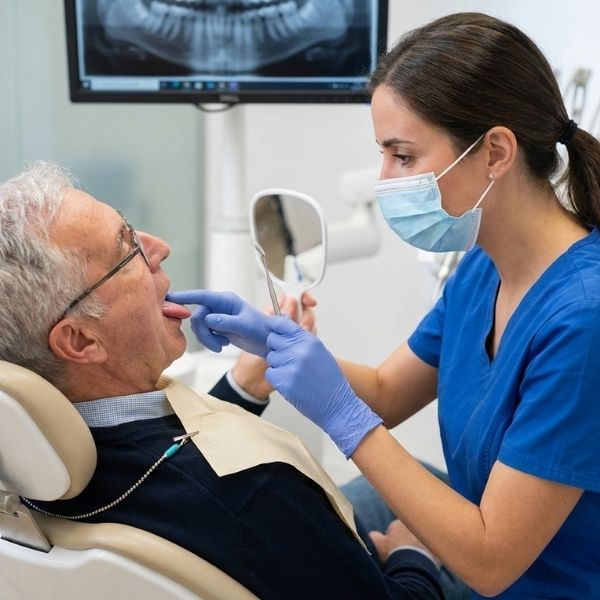
Oral cancer screening is a visual and tactile examination of all tissues inside and around your mouth. Your dentist systematically evaluates every area where oral cancer commonly develops, looking for abnormalities requiring further investigation.
The examination begins with a thorough visual inspection. Using bright lighting and sometimes magnification, the dentist examines your lips (inside and outside surfaces), gums, tongue (top, bottom, and sides), floor of mouth, roof of mouth (hard and soft palate), inner cheeks, and back of throat.
We look for visible abnormalities including red patches (erythroplakia), white patches (leukoplakia), mixed red-white patches (erythroleukoplakia), ulcers or sores that don't heal within 2-3 weeks, lumps or thickened areas, rough or crusty spots, and any tissue that looks different from surrounding areas.
Next comes tactile examination. The dentist uses gloved hands to feel the tissues inside your mouth and external structures. This palpation detects lumps, hard areas, or textural abnormalities not visible to the eye. We gently feel lymph nodes in your neck to check for swelling that might indicate spreading disease.
The dentist pays special attention to common oral cancer sites: the tongue (especially sides and underneath), floor of mouth, soft palate, and tonsil areas. Approximately 90% of oral cancers are squamous cell carcinomas originating in the flat cells lining these surfaces.
Throughout the examination, we ask about symptoms you might have noticed: persistent sore throat, difficulty swallowing, ear pain, numbness in mouth or lips, voice changes, or any concerns about lumps or sores.
For patients at high risk or when suspicious areas require enhanced evaluation, we may use adjunctive screening devices like VELscope (special blue light highlighting abnormal tissue), toluidine blue staining (dye that marks abnormal cells), or brush biopsy (collecting cells for laboratory analysis).
Time Required: 2-3 minutes as part of comprehensive dental exam.
Ready to take the next step? Our team is here for you.
While regular professional screening catches most problems early, you should schedule an immediate appointment if you notice any of these warning signs between routine visits:
Most oral abnormalities turn out to be benign (non-cancerous)—common causes include irritation from dental work, accidental biting, infections, or harmless cysts. However, only professional evaluation can determine whether a lesion is concerning. Never ignore persistent changes hoping they'll resolve on their own.
Early detection is critical. A two-week delay in diagnosing oral cancer can significantly impact treatment success and survival. If you notice anything unusual, call us immediately at (613) 482-0501.
Ready to learn more? Schedule a consultation today.
If your dentist identifies a suspicious area during screening, don't panic. Most abnormalities prove benign upon further evaluation. However, any concerning finding requires additional investigation to rule out cancer or precancerous changes.
For very small, minimally concerning areas, your dentist may photograph the lesion and re-examine in 2-3 weeks. Many irritations and minor lesions resolve on their own. If the area persists or worsens, biopsy follows.
Suspicious lesions require tissue biopsy—removing a small sample for microscopic examination by a pathologist. We refer you to an oral surgeon or ear-nose-throat (ENT) specialist for this procedure. Biopsy results typically return in 5-7 business days.
Clearly benign lesions (like specific cyst types) may be removed directly for comfort or aesthetic reasons without pre-biopsy.
Lesions appearing outside our expertise or requiring specialized evaluation prompt immediate referral to appropriate medical specialists.
A cancer diagnosis understandably feels overwhelming. However, remember that early-stage oral cancer caught through screening has excellent treatment success rates. Your care team typically includes an oral surgeon, oncologist, radiation oncologist, and support specialists. Treatment may involve surgery, radiation therapy, chemotherapy, or combinations depending on cancer type, stage, and location.
Throughout this process, our dental team remains involved in your care—providing supportive treatments for mouth sores, helping maintain nutrition during treatment, and monitoring your recovery. We work closely with your oncology team to optimize outcomes.
Have questions? We'd love to hear from you.
While screening detects cancer early, prevention reduces risk of developing it in the first place. Many lifestyle modifications significantly lower your oral cancer likelihood.
Regular dental visits remain your best prevention strategy—professional screening catches problems you'd never notice yourself until too late.
Oral cancer screening is typically included in your comprehensive dental examination at no additional charge. Most dental insurance plans cover preventive exams at 80-100%, which includes oral cancer screening as a standard component.
Comprehensive dental exam with oral cancer screening costs $75-150 when performed as part of routine care. Specialized adjunctive screening devices (if needed) may cost an additional $30-75 and may or may not be covered by insurance depending on your plan.
If screening identifies a suspicious lesion requiring biopsy, the biopsy procedure (typically performed by an oral surgeon) costs $300-800 and is usually covered at 50-80% by dental insurance when medically necessary. We provide direct billing to major insurers and accept the Canadian Dental Care Plan (CDCP) for eligible patients.
Compared to the financial and personal costs of treating advanced oral cancer ($20,000-100,000+ in medical expenses, months of treatment, and potential disfigurement), regular screening represents an invaluable investment in your health and peace of mind.
Our patients consistently rate us 5 stars for gentle, anxiety-free care. Read verified patient experiences on Google.
View All Reviews on GoogleDentist Referrals Welcome: We collaborate with referring dentists throughout Ottawa and Eastern Ontario for dental sedation cases.
We welcome patients from throughout Ottawa including Kanata, Nepean, Orléans, Stittsville, Manotick, and Greely, as well as Eastern Ontario communities (Rockland, Embrun, Russell, Winchester, Kemptville, Carleton Place, Arnprior, Renfrew, Pembroke, Cornwall, Hawkesbury) and West Quebec (Gatineau, Aylmer, Hull, Chelsea, Wakefield, Buckingham).
