Supernumerary teeth are extra teeth that develop beyond the normal count of 20 baby teeth or 32 permanent teeth. While they might sound harmless, these extra teeth can block permanent teeth from erupting properly, cause severe crowding, create painful cysts, or damage neighboring teeth. At Dental Sedation Ottawa, we specialize in the gentle, precise removal of supernumerary teeth using comprehensive sedation options—from mild relaxation to complete sleep—ensuring your child receives expert surgical care without fear or anxiety.
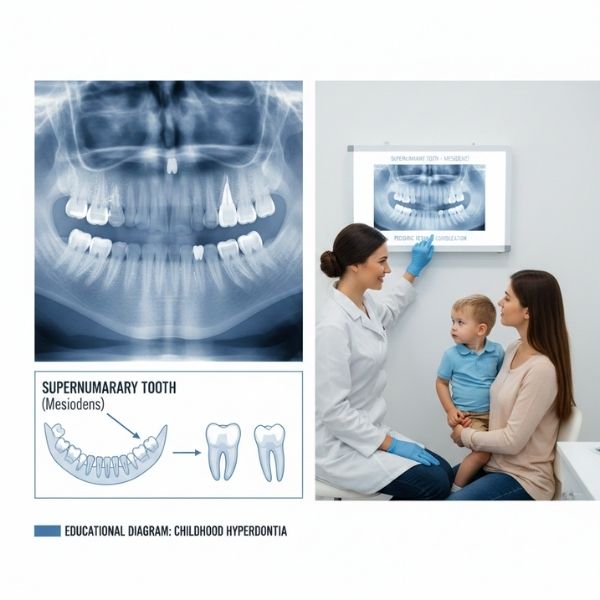
Supernumerary means "extra" or "more than the standard number." These additional teeth develop when tooth buds form incorrectly during early childhood dental development. About 1-4% of children develop at least one supernumerary tooth, and they occur about twice as often in males as females.
These extra teeth can appear anywhere in the mouth, but they most commonly develop in specific locations: between the upper front teeth (called a mesiodens), behind the upper molars (fourth molars or distomolars), or occasionally beside the canines. Some supernumerary teeth erupt normally into the mouth and are visible, but many remain hidden beneath the gums (impacted) and are only discovered through dental X-rays.
Supernumerary teeth come in various shapes and sizes. Some look almost identical to normal teeth, while others are small, peg-shaped, or oddly formed. They might be oriented normally, or they can be rotated, inverted, or angled in unusual directions. Some children develop just one extra tooth, while others have multiple supernumeraries.
The cause isn't fully understood, but genetics play a significant role—supernumerary teeth often run in families. They're also more common in children with certain conditions like cleft lip and palate or specific genetic syndromes.
Ready to learn more? Schedule a consultation today.
At Dental Sedation Ottawa, we understand that the idea of surgical tooth removal can feel frightening for both children and parents. Supernumerary tooth extraction often requires more complex surgery than routine extractions, especially when teeth are deeply impacted or positioned near important structures. That's why we prioritize comfort through comprehensive sedation dentistry options.
Mild relaxation for cooperative older children when removing simple, erupted supernumerary teeth with minimal anxiety. Your child stays awake and aware. Effects wear off within minutes.
Learn more about nitrous oxide →Medication taken before the appointment creates drowsiness and significantly reduces anxiety. Good for moderately nervous children or moderately complex extractions. Your child remains responsive but deeply relaxed.
Explore oral sedation →Deeper sedation administered through a tiny IV line provides continuous comfort throughout surgery, with constant monitoring by our trained team. Excellent for high anxiety, younger children, or complex impacted supernumerary teeth requiring bone removal.
Discover IV sedation →Complete, peaceful sleep with zero awareness or memory of the procedure. Administered by board-certified medical anesthesiologists (Dr. Hesham Talab, MD MSc PhD FRCPC FASE and Dr. Asad Mirghassemi, MD MSc FRCPC). Best for severe dental anxiety, very young children, special needs patients, deeply impacted teeth, multiple supernumeraries, or when combining with other procedures. Hospital-grade safety protocols right in our dental clinic.
Learn about general anesthesia →With IV sedation or general anesthesia, we can remove multiple supernumerary teeth along with any other needed treatments—orthodontic exposures, other extractions, or dental restorations—all in a single comfortable appointment. This approach minimizes your child's overall stress, reduces time away from school, and means one recovery period instead of multiple.
Questions? We're here to help.
Not all supernumerary teeth require immediate removal—some are monitored with regular X-rays if they're small, not causing problems, and unlikely to erupt or create issues. However, most supernumerary teeth eventually need extraction because of the complications they cause.
The most frequent problem. Supernumerary teeth physically obstruct permanent teeth from erupting normally, trapping them beneath the gums (impaction). This is especially common with mesiodens blocking upper front incisors.
Extra teeth take up space in the dental arch, forcing permanent teeth into crooked positions or preventing them from erupting into their proper locations.
Supernumerary teeth can push permanent teeth apart, creating unsightly gaps between front teeth that won't close on their own.
Impacted supernumerary teeth sometimes press against the roots of adjacent permanent teeth, potentially causing root resorption (dissolving) and damaging otherwise healthy teeth.
Fluid-filled sacs (dentigerous cysts) can develop around impacted supernumerary teeth, expanding and damaging surrounding bone and neighboring tooth roots.
Extra teeth interfere with braces or clear aligners by occupying space needed for proper tooth alignment.
Partially erupted supernumerary teeth create pockets where bacteria accumulate, leading to infections, gum disease, or decay in surrounding teeth.
Extra teeth can alter how upper and lower teeth come together, creating bite irregularities that affect chewing and jaw function.
When Monitoring Is Acceptable: Small supernumerary teeth positioned well away from permanent teeth, showing no signs of pathology (cysts), not interfering with eruption, and unlikely to erupt themselves can sometimes be monitored with periodic X-rays (every 12-18 months) rather than immediately removed. However, most orthodontists and pediatric dentists recommend extraction because problems tend to develop eventually.
Ready to take the next step? Our team is here for you.
Before surgery, we conduct thorough examination and take detailed X-rays or 3D imaging to precisely locate the supernumerary tooth and plan the safest surgical approach. We discuss sedation options based on your child's age, anxiety level, the tooth's complexity, and whether other treatments are needed simultaneously.
On surgery day, we begin by administering your chosen sedation option. Once your child is comfortable and relaxed (or peacefully asleep with general anesthesia), we ensure complete numbness of the surgical area. Throughout the procedure, our team continuously monitors your child's vital signs and comfort for safety.
For erupted supernumerary teeth visible in the mouth, removal resembles a standard extraction—the dentist carefully loosens the tooth and removes it, similar to pulling a baby tooth.
For impacted supernumerary teeth beneath the gums, surgery is more involved. The surgeon makes a small incision in the gum tissue and gently reflects it back to expose the underlying bone. Using specialized instruments, we carefully remove enough bone to access the impacted tooth. The supernumerary tooth is then sectioned (cut into smaller pieces if necessary) and removed carefully to avoid disturbing adjacent permanent teeth.
If the procedure involves exposing a permanent tooth for orthodontic treatment (when the supernumerary tooth was blocking its eruption), we may bond an orthodontic bracket and chain to the impacted permanent tooth at the same appointment. This chain helps the orthodontist later guide that tooth into its proper position.
After removing the supernumerary tooth, we smooth the bone, thoroughly irrigate the area, and close the incision with dissolvable stitches. We place gauze over the surgical site to control bleeding and provide detailed post-operative instructions.
Time Required: Simple erupted supernumerary tooth removal takes 15-20 minutes. Complex impacted extractions require 30-60 minutes per tooth, depending on position, depth, and proximity to important structures.
Have questions about the procedure?
Expect some swelling, discomfort, and minor bleeding for the first 1-3 days after surgery. The amount varies by surgical complexity—simple extractions cause minimal swelling, while deeply impacted tooth removal may result in moderate facial swelling that peaks on day 2-3 before gradually improving.
Children's ibuprofen manages pain effectively for most children. Some may need prescription pain medication for the first 1-2 days after complex surgery. Apply ice packs to the face (20 minutes on, 20 minutes off) during the first 24 hours to minimize swelling.
Stick to soft, cool foods for 3-5 days: yogurt, smoothies (no straws—suction can dislodge blood clots), mashed potatoes, pasta, eggs, ice cream, applesauce. Avoid hot, spicy, crunchy, or chewy foods. Stay well-hydrated with plenty of water.
Your child can usually return to school within 2-3 days, though you might prefer scheduling surgery before a weekend for more recovery time. Avoid strenuous physical activity and contact sports for 5-7 days to prevent bleeding and protect healing.
Stitches dissolve on their own within 7-14 days—no removal appointment needed. The surgical site heals completely within 2-4 weeks, though complete bone regeneration takes 3-6 months. We schedule a follow-up appointment 7-14 days after surgery to check healing.
Orthodontic Implications: If the supernumerary tooth was blocking a permanent tooth, that permanent tooth often begins erupting naturally within 6-18 months after removal, especially if the child is under age 10. For older children or teeth that don't erupt spontaneously, orthodontic treatment with braces guides the tooth into position.
Questions about your options? We're here to help.
Visible teeth
Depending on complexity
When needed
Including anesthesia
Most dental insurance plans cover supernumerary tooth extraction at 50-80% when medically necessary to prevent complications like impaction, crowding, or cyst formation. We provide direct billing to major insurance carriers and accept the Canadian Dental Care Plan (CDCP).
When you consider that untreated supernumerary teeth often lead to expensive complications—orthodontic treatment for severely impacted permanent teeth ($5,000-8,000), surgical exposure and bonding procedures ($1,500-2,500), or cyst removal surgery ($2,000-4,000)—early removal represents sound preventive investment.
Our patients consistently rate us 5 stars for gentle, anxiety-free care. Read verified patient experiences on Google.
View All Reviews on GoogleDentist Referrals Welcome: We collaborate with referring dentists and orthodontists throughout Ottawa and Eastern Ontario for complex pediatric oral surgery cases.
Learn More About Our Referral Process