Oral habits like thumb sucking, finger sucking, and tongue thrusting feel comforting to children, but when they continue past age 4-5, these habits can significantly affect dental development, facial growth, and speech. At Dental Sedation Ottawa, we provide custom habit appliances (also called habit breakers or habit-breaking devices) to help your child overcome these patterns gently and effectively. And with our comprehensive sedation options, even anxious children can have these appliances fitted comfortably and stress-free.
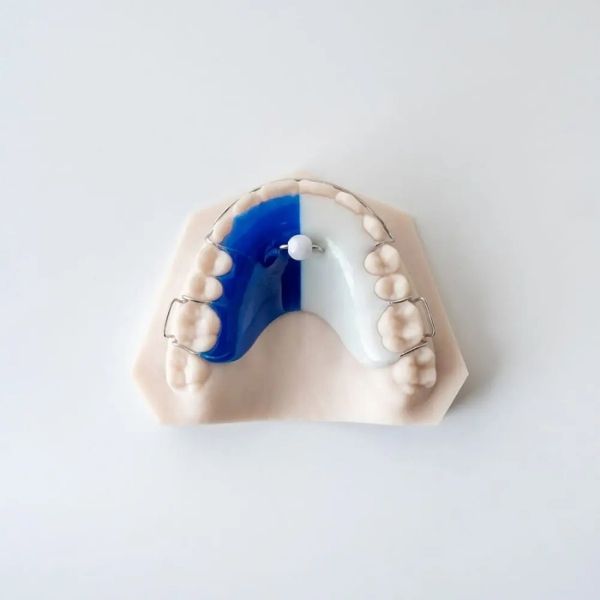
Habit appliances are custom-made orthodontic devices designed to discourage persistent oral habits that can harm your child's dental and facial development. These small appliances work by serving as gentle reminders or creating a physical barrier that makes the habit uncomfortable or impossible to continue, helping your child break the pattern naturally.
Think of them as training wheels for breaking oral habits—they provide structure and support while your child's brain learns new patterns. Most children adapt quickly and overcome their habits within 3-6 months of wearing the appliance.
The most common habit appliances address three primary concerns: thumb sucking or finger sucking, tongue thrusting (pushing the tongue forward against or between teeth during swallowing), and tongue positioning problems (resting the tongue between or against front teeth).
These habits might seem harmless, but when they persist beyond early childhood (typically past age 4-5), they can cause serious orthodontic problems: protruding front teeth ("buck teeth"), open bites (upper and lower front teeth don't touch when biting), crossbites, narrow upper jaws, speech problems (especially with "s," "z," and "th" sounds), and changes in facial growth patterns.
The good news? Habit appliances have excellent success rates—typically 85-95%—when used properly and with parental support. They work best when your child is motivated to stop the habit and understands why the appliance is necessary.
Ready to learn more? Schedule a consultation today.
At Dental Sedation Ottawa, we understand that getting a new appliance can feel overwhelming for some children, especially those with anxiety about dental visits. While habit appliance placement is usually straightforward and quick, we offer sedation options for children who need extra comfort support.
Mild relaxation for most children during appliance fitting and cementation. Your child stays awake and aware, breathing through a comfortable nose mask. The relaxed, "silly" feeling helps them stay calm during the appointment. Effects disappear within minutes. Learn more about nitrous oxide
Medication taken before the appointment creates drowsiness and reduces anxiety for children who are moderately nervous or have difficulty sitting still. Your child remains responsive but deeply relaxed. Explore oral sedation
Deeper sedation for high anxiety or when placing the appliance along with other dental treatments. Administered through a tiny IV line with continuous monitoring. Discover IV sedation
Complete sleep for severe dental anxiety, special needs patients, very young children, or when extensive dental work is needed simultaneously with appliance placement. Administered by board-certified medical anesthesiologists (Dr. Hesham Talab, MD MSc PhD FRCPC FASE and Dr. Asad Mirghassemi, MD MSc FRCPC). Learn about general anesthesia
Combined Treatment Approach: If your child needs other dental work—fillings, crowns, extractions, or cleanings—we can place the habit appliance during the same sedated appointment. This means one visit instead of multiple, one recovery period, and significantly less overall stress for your family.
Questions? We're here to help.
Different habits require different appliance designs. Your dentist recommends the most appropriate type based on which habit needs correction, your child's age, dental development, and motivation level.
The most common habit appliance for thumb or finger sucking. This fixed device consists of semicircular wires that extend from a palatal bar (attached to bands on the upper back molars) down toward the front teeth. The wires don't hurt, but they create an uncomfortable sensation when the child tries to suck their thumb, breaking the satisfying seal that makes thumb sucking pleasurable. Most children stop the habit within 2-4 weeks of placement, though the appliance stays in for 4-6 months to ensure the pattern doesn't return.
Similar to a palatal crib but with small plastic or metal prongs extending downward. The prongs gently irritate the thumb when sucking is attempted, making the habit unpleasant without causing harm. Particularly effective for persistent thumb suckers who haven't responded to other interventions.
A fixed appliance with semicircular wires extending from the palatal bar down behind the front teeth. This creates a gentle barrier that reminds the tongue to stay in proper position and prevents it from thrusting forward during swallowing. The tongue learns new, correct swallowing patterns within 3-6 months.
A unique device featuring a small rotating roller or "bead" attached to a palatal bar. The child can play with this roller using their tongue, providing oral stimulation and reminding the tongue to stay in the correct position against the roof of the mouth rather than pushing forward. Excellent for both tongue thrusting and thumb sucking—the roller provides an alternative activity for the mouth.
All these appliances are cemented to the upper back molars and remain in place 24/7 for the treatment duration (typically 6-12 months). They can't be removed by the child, ensuring consistent habit breaking. The appliances are custom-made to fit your child's mouth comfortably and designed to interfere with the habit while allowing normal eating, drinking, speaking, and oral hygiene.
Ready to take the next step? Our team is here for you.
Not every child with oral habits needs a habit appliance. Most dental experts recommend monitoring oral habits until around age 4-5, as many children naturally outgrow thumb sucking and tongue issues on their own during this developmental period.
Your dentist assesses the severity of the habit, examines any existing dental changes, considers your child's age and emotional readiness, and discusses whether a habit appliance is appropriate or if continued monitoring makes more sense.
Have questions? We'd love to hear from you.
Before the appliance placement appointment, we take detailed impressions (molds) of your child's upper teeth. These impressions go to a dental laboratory where technicians fabricate the custom appliance—usually ready within 2-3 weeks. We also take photographs and X-rays to document your child's current dental condition.
At the fitting appointment, we begin by administering your chosen sedation option if needed. For most children, nitrous oxide provides adequate relaxation, though some require deeper sedation. Once comfortable, we ensure your child can tolerate the sensations in their mouth.
The dentist first fits stainless steel bands around the upper first molars (the large back teeth). These bands are similar to orthodontic bands—they fit snugly around the teeth like rings. We try on the bands, make any necessary adjustments for perfect fit, then cement them securely in place using dental cement.
Next, the habit appliance—which has extensions that attach to the bands—is carefully positioned. For fixed appliances like cribs and rakes, the wire or plastic extensions are soldered or welded to the bands. The entire appliance is then cleaned, polished, and checked to ensure it's comfortable, doesn't interfere with eating or speaking, and effectively interrupts the target habit.
We carefully review with both you and your child how the appliance works, what sensations to expect, eating guidelines, and how to maintain proper oral hygiene around it.
Time Required: Taking initial impressions takes 10-15 minutes. The appliance placement appointment typically requires 45-60 minutes for careful fitting, cementation, and instruction.
Ready to get started?
The first 2-3 days with a new habit appliance involve adaptation. Your child will feel the appliance constantly and may find it strange or uncomfortable initially. Speech might sound slightly different (especially "s" and "th" sounds), but this resolves within 3-5 days as the tongue adapts. Eating requires some adjustment—start with soft foods and gradually return to normal diet.
Some irritation of the tongue or lips may occur during the first week as soft tissues adapt to the appliance. Dental wax (which we provide) can cover any rough areas temporarily. These irritations resolve quickly as the mouth adjusts.
Brush carefully around the appliance twice daily, paying special attention to cleaning where the bands meet the teeth and around the wires or prongs. Food particles can trap around habit appliances more easily than around natural teeth alone. Use a proxy brush (tiny Christmas tree-shaped brush) or floss threader to clean under wires.
Avoid very sticky foods (caramel, taffy, gummy candies) that could pull the appliance loose. Don't bite into hard foods like apples or carrots with front teeth—cut them into small pieces. Ice, hard candies, and chewing on non-food objects should be avoided.
Most children attempt their habit once or twice after appliance placement, find it uncomfortable or unsatisfying, and quickly stop trying. The habit typically breaks within 2-4 weeks. However, the appliance remains in place for 6-12 months to ensure the habit pattern is completely eliminated and doesn't return.
For tongue thrusting, the appliance retrains the tongue to proper resting position and correct swallowing patterns over 3-6 months. This retraining is gradual—your child won't notice day-to-day changes, but over weeks and months, new patterns become automatic.
We schedule follow-up appointments every 4-8 weeks to monitor appliance condition, check oral hygiene, assess habit cessation progress, and evaluate any dental changes. Once the habit is reliably broken and sufficient time has passed to ensure it won't return, we schedule appliance removal—a quick, easy 15-minute appointment that requires no anesthesia or sedation.
Call us at (613) 482-0501 if:
Ready to learn more? Schedule a consultation to discuss your options.
Habit appliances typically cost starting at $600-900, including impressions, laboratory fabrication, placement appointment, and follow-up care. Appliance removal is usually included in this fee. If sedation is needed for placement, sedation fees are additional.
When you consider that oral habits left uncorrected often lead to significant orthodontic problems requiring $4,000-8,000 in braces treatment, open bite correction ($5,000-10,000), or even jaw surgery in severe cases ($15,000-30,000), habit appliances represent exceptional preventive value. The relatively small upfront investment can prevent thousands in future treatment costs.
Many dental insurance plans cover habit appliances at 50-80% when deemed medically necessary to prevent or correct dental problems. We provide direct billing to major insurance carriers and accept the Canadian Dental Care Plan (CDCP).
Our team reviews your insurance coverage and direct billing options during consultation and provides comprehensive cost estimates before treatment begins.
Our patients consistently rate us 5 stars for gentle, anxiety-free care. Read verified patient experiences on Google.
View All Reviews on GoogleDentist Referrals Welcome: We collaborate with referring dentists and orthodontists throughout Ottawa and Eastern Ontario for pediatric habit appliance cases. Learn more about our referral process.
We welcome patients from throughout Ottawa including Kanata, Nepean, Orléans, Stittsville, Manotick, and Greely, as well as Eastern Ontario communities (Rockland, Embrun, Russell, Winchester, Kemptville, Carleton Place, Arnprior, Renfrew, Pembroke, Cornwall, Hawkesbury) and West Quebec (Gatineau, Aylmer, Hull, Chelsea, Wakefield, Buckingham).
