A lip tie occurs when the frenum — the connective tissue between your child's upper lip and gums — is too tight or positioned too low, restricting normal lip movement. In infants, this can cause significant breastfeeding difficulties including poor latch, inadequate milk transfer, and maternal nipple pain. In children, untreated lip tie can lead to gaps between front teeth, difficulty maintaining oral hygiene, and gum recession. Lip tie release (labial frenectomy) is a quick, minimally invasive procedure that frees the upper lip, improving feeding function and preventing long-term dental problems. At Dental Sedation Ottawa, we perform lip tie releases with comprehensive sedation options tailored to your child's age and anxiety level.
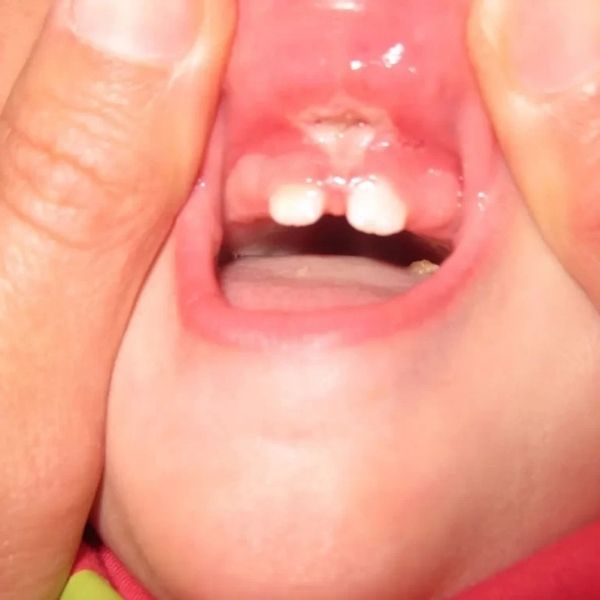
A lip tie is a condition where the labial frenum — the thin tissue connecting your upper lip to your gums — is abnormally thick, short, or attached too far down. The frenum normally exists in everyone, but in a lip tie, it restricts the lip's ability to move freely and flange outward.
The frenum is classified into four grades based on its position and density: Class 1 (minimal impact), Class 2 (moderate), Class 3 (significant), and Class 4 (severe). Higher classes cause progressively more functional problems.
Unlike some structural issues, lip tie is not a cosmetic concern — it has real functional impacts on feeding in infants and oral health in children. The tightness limits how far the upper lip can lift and move, affecting breastfeeding mechanics, dental development, and the ability to maintain proper oral hygiene.
Comprehensive sedation options tailored to your child's age, anxiety level, and procedure needs.
The upper lip must flange outward to create an effective seal during breastfeeding. When lip tie restricts this movement, babies experience difficulty achieving a deep latch, poor seal during nursing with constant air entry, milk leakage, prolonged feeding times (45-60+ minutes), maternal nipple pain and damage, and excessive gas intake leading to reflux. When both lip tie and tongue tie occur together, feeding difficulties can be profound.
As children grow, untreated lip tie can cause diastema (prominent gap between upper front teeth) when the frenum extends between central incisors, difficulty with oral hygiene (cannot lift upper lip sufficiently to clean front teeth), gum recession when the frenum attaches very low and pulls gums away from teeth, and in some cases speech impact affecting 'p,' 'b,' 'm,' 'w' sounds.
Upper lip appearing tight against gums, baby unable to flange lip outward during feeding, visible thick band of tissue between lip and gums, obvious gap between upper front teeth in children over age 7, difficulty brushing upper front teeth because lip won't lift, food or milk residue trapped under upper lip, and lip curling under when smiling instead of lifting naturally.
Thorough evaluation including visual examination of the frenum's thickness, attachment point, and classification, functional assessment of lip mobility, review of feeding difficulties or dental spacing issues, and for infants, coordination with lactation consultants when possible.
Based on your child's age and needs, we administer appropriate anesthesia and sedation. For young infants, topical gel may suffice. For older children, we ensure complete numbness and relaxation using one of our sedation options.
The practitioner gently lifts the upper lip to expose the frenum fully. Using surgical scissors or a scalpel, we carefully cut through the frenum tissue, releasing its restrictive attachment. For simple, thin frenums, this takes just 2-5 minutes. For thicker frenums (Class 3-4), we may remove more tissue and occasionally place 1-3 dissolvable stitches. Even complex releases typically take only 10-20 minutes.
We apply pressure with gauze to control bleeding (stops within 2-3 minutes), demonstrate the lip's new range of motion, teach essential stretching exercises, and for infants, encourage feeding shortly after the procedure for comfort.
Immediate Recovery (First 24-72 Hours): For infants, discomfort is minimal — most babies nurse shortly after the procedure. Some fussiness occurs for 24-48 hours. The release site turns white or yellowish within 24-48 hours (normal healing tissue). For children, stick to soft, cool foods for 2-3 days. Children's ibuprofen or acetaminophen manages discomfort for 1-2 days.
Stretching Exercises (Essential): The most important aspect of lip tie aftercare is stretching exercises to prevent frenum reattachment. Without consistent stretching, reattachment occurs in 10-30% of cases. We teach you to gently lift your child's upper lip away from the gums and stretch the release site 4-6 times daily for 3-4 weeks.
For Infants: Feeding improvements typically manifest within 7-14 days as baby learns to use the newly mobile lip. Working with a lactation consultant after release optimizes outcomes.
For Children with Diastema: The gap between front teeth often begins closing naturally within 3-6 months after release, especially in children ages 7-10. Complete closure can take 6-18 months. Children over age 10-11 may still need orthodontic treatment, but the frenum is no longer an obstacle.
For Gum Recession: Gum tissue often stabilizes and stops receding once the frenum's tension is removed. Preventing further recession is the primary goal.
Complete Healing: The release site heals completely within 2-4 weeks. Full functional improvement continues over weeks to months.
Transparent pricing for lip tie release procedures
Many dental insurance plans cover lip tie release at 50–80% when medically necessary.
We provide direct billing to major insurance carriers and accept the Canadian Dental Care Plan (CDCP).
Flexible payment options available.
Our patients consistently rate us 5 stars for gentle, anxiety-free care. Read verified patient experiences on Google.
View All Reviews on GoogleWhy families choose Dental Sedation Ottawa for lip tie release:
