Lip tie occurs when the band of tissue connecting the upper lip to the gums is too thick, too tight, or attached too low—restricting the lip's normal movement. While often less problematic than tongue tie, lip ties can cause breastfeeding difficulties in infants, create persistent gaps between front teeth in children, and contribute to gum recession and poor oral hygiene. At Dental Sedation Ottawa, we perform precise, gentle lip tie release procedures that restore normal lip mobility—with comprehensive sedation options ensuring complete comfort for patients from infancy through adolescence.
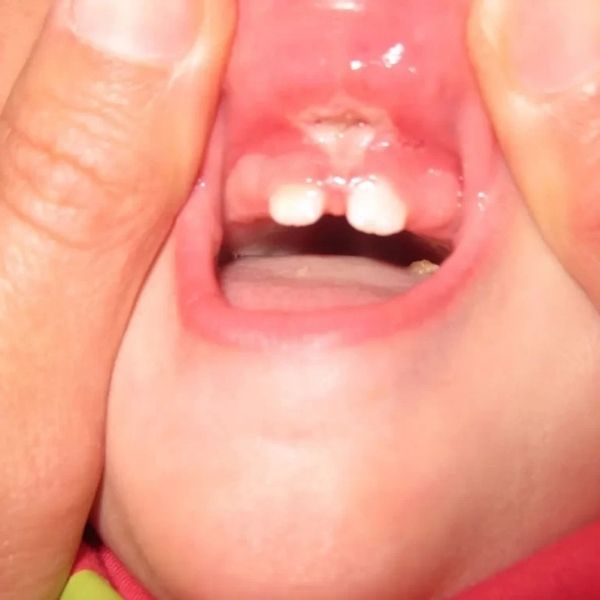
Lip tie, also called a restrictive labial frenum or superior labial frenum restriction, occurs when the thin membrane connecting the inside of the upper lip to the gums above the front teeth is too tight, too thick, or extends too far down toward the teeth. In normal anatomy, this frenum should be thin, flexible, and attach well above the gum line between the two front teeth. With lip tie, it restricts the upper lip's ability to lift, flange out, or move freely.
Think of the upper lip as needing to flip outward to create a proper seal during breastfeeding or to allow effective oral hygiene. When the frenum tethers the lip too tightly to the gums, these normal movements become restricted or impossible. The lip can't lift naturally, creating a cascade of potential problems from infancy through adulthood.
Lip tie commonly occurs alongside tongue tie—about 50% of babies with tongue tie also have lip tie. However, lip tie can occur independently. Like tongue tie, it has a genetic component and runs in families.
Ready to learn more? Schedule a consultation today.
At Dental Sedation Ottawa, we ensure lip tie release is comfortable and anxiety-free for children of all ages. While the procedure itself is brief and straightforward, we offer comprehensive sedation options tailored to your child's needs and your family's preferences.
For babies under 6 months, we often use only topical numbing gel. The procedure is very quick (5-10 minutes), and infants can be comforted immediately afterward. This gentle approach works well for straightforward infant lip tie releases.
For older infants, toddlers, and children, we combine local anesthetic injection (complete numbness) with nitrous oxide (laughing gas) for relaxation. The child stays awake but calm and comfortable. Learn more about nitrous oxide
Medication taken before the appointment creates drowsiness and reduces anxiety significantly. Excellent for moderately anxious children or when both tongue tie and lip tie are being released. Your child remains responsive but deeply relaxed. Explore oral sedation
Deeper sedation for high anxiety, very young children, or complex cases requiring more extensive tissue removal. Administered through a tiny IV line with continuous monitoring throughout. Discover IV sedation
Complete, peaceful sleep with zero awareness. Administered by board-certified medical anesthesiologists (Dr. Hesham Talab, MD MSc PhD FRCPC FASE and Dr. Asad Mirghassemi, MD MSc FRCPC). Best for severe anxiety, special needs children, very uncooperative toddlers, or when extensive dental work is needed along with lip tie release. Hospital-grade safety in our clinic. Learn about general anesthesia
Combined Treatment Efficiency: If your child needs other dental procedures—fillings, crowns, cleanings, tongue tie release—we can complete everything during one sedated appointment. One visit, one recovery, dramatically reduced overall stress for your family.
Questions? We're here to help.
Lip tie's primary impact in infants involves breastfeeding challenges. The upper lip must flange outward (curl up and out) to create an effective seal on the breast. When the lip is tethered too tightly, this flanging cannot occur properly, causing:
Importantly, isolated lip tie (without tongue tie) usually causes less severe feeding problems than tongue tie alone. However, when both occur together, feeding difficulties can be profound.
Lip tie can also affect bottle feeding, though typically to a lesser degree. Babies may have difficulty creating proper seal around bottle nipples, take very long to finish bottles, or have excessive drooling and milk loss around the lips.
As children grow, untreated lip tie can cause several problems:
Diastema (Gap Between Front Teeth): The most visible effect. When the labial frenum extends between the upper central incisors (front teeth), it physically prevents those teeth from coming together. This gap often persists even after all permanent teeth have erupted, requiring orthodontic treatment to close.
Difficulty with Oral Hygiene: The tight frenum makes it difficult or impossible to lift the upper lip sufficiently to clean the upper front teeth properly. This leads to higher plaque accumulation, increased cavities along the gum line of upper front teeth, and gum inflammation (gingivitis) in the upper front region.
Gum Recession: When the frenum attaches very low (Class 3-4), constant tension on the gum tissue can pull the gums away from the teeth over time, exposing tooth roots and increasing sensitivity and cavity risk.
Speech Impact: While less common than with tongue tie, severe lip tie can occasionally affect pronunciation of sounds requiring lip movement and closure, particularly "p," "b," "m," and "w" sounds.
Social and Aesthetic Concerns: Older children and teens may feel self-conscious about prominent gaps between front teeth or difficulty smiling naturally when the lip is restricted.
Ready to learn more? Schedule a consultation to discuss your options.
Unlike tongue tie, which often requires early intervention due to feeding impacts, lip tie treatment timing varies based on symptoms and their severity.
Most experts recommend releasing infant lip tie only if it's clearly contributing to feeding difficulties. If an infant has tongue tie AND lip tie with feeding problems, releasing both together often yields better results than releasing tongue tie alone. However, isolated lip tie without significant feeding issues may simply be monitored.
Consider infant lip tie release when:
For older children, lip tie treatment timing depends on the specific problem:
For Diastema (Gap): Most dentists recommend waiting until around age 7-8 when the upper permanent central incisors have fully erupted, and before the lateral incisors (teeth on either side) come in. Release at this age allows the gap to close naturally in many cases without orthodontics. Release too early (while baby teeth are still present) is ineffective because baby teeth spacing is normal.
For Gum Recession or Oral Hygiene Problems: Release can be performed at any age when these issues are identified, as they won't improve without intervention and may worsen over time.
For Orthodontic Treatment: Orthodontists often request lip tie release before or during braces treatment if the frenum is preventing desired tooth movement or if it will cause relapse after braces are removed.
Have questions? We'd love to hear from you.
Before the procedure, we conduct thorough evaluation including visual examination of the frenum's thickness, attachment point, and classification, functional assessment of lip mobility (can it lift and flange properly?), review of feeding difficulties, dental spacing issues, or gum problems, and for infants with feeding concerns, often coordination with lactation consultants.
On the day of the release, we begin by administering appropriate anesthesia/sedation based on your child's age and needs. For young infants, topical gel may suffice. For older children, we ensure complete numbness and relaxation.
The practitioner gently lifts the upper lip to expose the frenum fully and visualize its attachment. Using surgical scissors or a scalpel, we carefully cut through the frenum tissue, releasing its restrictive attachment. For simple, thin frenums, this takes just 2-5 minutes. The frenum contains some blood vessels, so bleeding is usually slightly more than with tongue tie, but still minimal and stops within 2-3 minutes with gentle pressure.
For thicker frenums (Class 3-4), the release may require removing more tissue and occasionally placing 1-3 dissolvable stitches to ensure proper healing and prevent reattachment. Even complex releases typically take only 10-15 minutes.
Some practitioners use laser technology for lip tie release. Lasers can seal blood vessels during cutting, reducing bleeding, and some believe they promote faster healing with less post-operative discomfort.
After the release, we apply pressure with gauze to control bleeding, demonstrate the lip's new range of motion, teach stretching exercises that are essential for preventing reattachment, and for infants, encourage feeding shortly after the procedure for comfort.
Time Required: Simple infant lip tie release: 5-10 minutes. Complex releases or procedures in older children: 10-20 minutes.
Ready to get started?
Breastfeeding immediately after the procedure provides comfort and begins retraining the lip's movement. Some babies show immediate feeding improvement; others need several days to adjust. A temporary worsening of feeding for 24-48 hours sometimes occurs as baby adjusts to different sensations.
The single most important aspect of lip tie aftercare is stretching exercises to prevent the frenum from reattaching during healing. Without consistent stretching, reattachment occurs in 10-30% of cases—much higher than with tongue tie.
We teach you to gently lift your child's upper lip away from the gums and stretch the release site 4-6 times daily for 3-4 weeks. This involves pulling the lip up and out, holding for a few seconds, then releasing. Yes, this is uncomfortable and babies cry. Yes, you're disrupting healing tissue. But it's absolutely critical for success.
For older children, we teach them exercises to lift and hold their lip against the release site multiple times daily.
The release site heals completely within 2-4 weeks. Functional improvements vary by age and the reason for release:
For Infants: Feeding improvements typically manifest within 7-14 days as baby learns to use the newly mobile lip. Some show immediate change; others improve gradually. Working with a lactation consultant after release optimizes outcomes.
For Children with Diastema: The gap between front teeth often begins closing naturally within 3-6 months after release, especially in children ages 7-10. Complete closure can take 6-18 months. Children over age 10-11 or those with other spacing issues may still need orthodontic treatment (braces or clear aligners), but the frenum is no longer an obstacle to tooth movement or cause of relapse.
For Gum Recession: Gum tissue often stabilizes and stops receding once the frenum's tension is removed, though tissue that already receded typically doesn't regenerate. Preventing further recession is the goal.
Call us at (613) 482-0501 if:
Ready to learn more? Schedule a consultation to discuss your options.
Lip tie release typically costs starting at $300-600 depending on complexity, age of patient, and sedation requirements. Simple infant release with topical anesthesia is at the lower end. Complex releases in older children or those requiring deeper sedation are higher.
Many dental insurance plans cover lip tie release at 50-80% when medically necessary due to documented feeding difficulties, diastema, gum recession, or orthodontic indications. We provide direct billing to major insurance carriers and accept the Canadian Dental Care Plan (CDCP).
Our team reviews your insurance coverage during consultation and provides clear cost estimates before treatment.
When you consider alternatives—months of breastfeeding struggles, orthodontic treatment to close gaps ($3,000-6,000), gum grafting surgery for recession ($800-1,500 per tooth), or years of poor oral hygiene in hard-to-clean areas—lip tie release represents excellent preventive value.
"My husband and I brought in our daughters for their first visits. Our youngest, 4 years old, was extremely nervous before arriving. That quickly changed, as the receptionists were beyond kind. Dr. Koniouchine, simply put, is fantastic. 10/10."
— Julie Lacelle
"I had an emergency case with my son and Dr. Alimova was so kind to squeeze us in between her patients and provide us with the best service. Even though like many kids in his age afraid of doctors she was able to find approach to him. I highly recommend her!"
— Zukhra Turakulova
"Great place, very good attention to details. Made us comfortable knowing that our son would have the best care."
— Lynn Thibault
"Staff was friendly, efficient and technically skilled. My extraction was as painless as it gets."
— Conor Middleton
Dentist Referrals Welcome: We collaborate with referring dentists, pediatricians, lactation consultants, and orthodontists throughout Ottawa and Eastern Ontario. Learn more about our referral process.
We welcome patients from throughout Ottawa including Kanata, Nepean, Orléans, Stittsville, Manotick, and Greely, as well as Eastern Ontario communities (Rockland, Embrun, Russell, Winchester, Kemptville, Carleton Place, Arnprior, Renfrew, Pembroke, Cornwall, Hawkesbury) and West Quebec (Gatineau, Aylmer, Hull, Chelsea, Wakefield, Buckingham).
