Traditional removable dentures can make life frustrating—slipping when you eat or speak, causing sore spots, restricting your diet to soft foods, and creating anxiety in social situations. Implant-supported dentures transform this experience completely. By anchoring your denture to dental implants surgically placed in your jaw, you gain remarkable stability, comfort, and confidence. At Dental Sedation Ottawa, we specialize in making the implant placement procedure completely comfortable through comprehensive sedation options—from IV sedation to complete sleep with general anesthesia—so you can upgrade your denture experience without fear or anxiety.
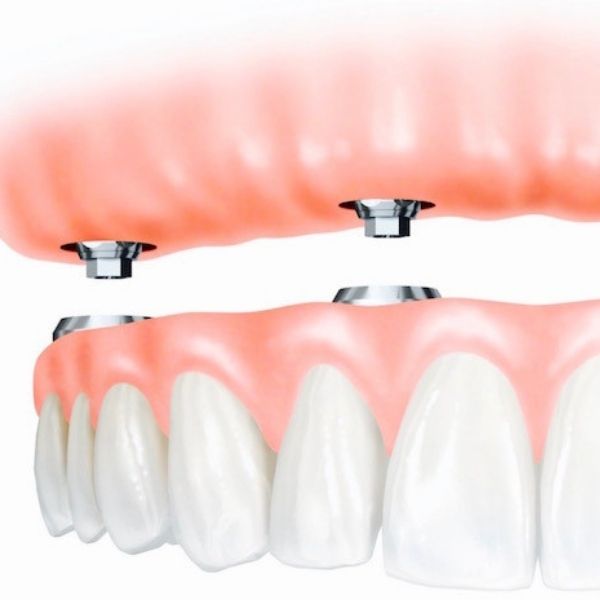
Implant-supported dentures (also called implant-retained dentures or overdentures) are removable or fixed dentures that attach to dental implants rather than simply resting on your gums. Think of implants as sturdy anchor posts permanently fixed in your jawbone, and the denture as a prosthesis that connects to these posts for exceptional stability.
These dentures have special attachments on the underside that snap onto corresponding attachments (locators or bars) connected to your implants. You can remove the denture daily for cleaning, but while worn, it's securely held in place by the implant connections. Most patients use 2-4 implants per arch for snap-in dentures—typically 2 implants for lower arch, 4 implants for upper arch due to softer bone.
These dentures are permanently attached to implants—you cannot remove them. They're essentially full-arch bridges screwed onto multiple implants (typically 4-6 per arch). Only your dentist can remove them for maintenance. These provide the most tooth-like experience, closest to natural teeth in stability and function.
The key difference from traditional dentures is stability. Regular dentures rely entirely on suction (upper) or just sit on your gum ridge (lower)—they shift, slip, and can be quite uncomfortable. Implant-supported dentures connect to fixed anchor points in your bone, eliminating virtually all movement. You can eat foods you've been avoiding for years, speak with complete confidence, and stop worrying about your dentures at awkward moments.
Implant-supported dentures also prevent the progressive bone loss that occurs under traditional dentures. The implants stimulate bone just like natural tooth roots, preserving your jaw structure and facial appearance for years to come.
Ready to learn more? Schedule a consultation today.
At our Ottawa dental clinic, we understand that dental implant surgery can sound intimidating, especially when you're already dealing with denture frustrations. We make comfort and anxiety-free care our absolute priority through specialized sedation dentistry options.
Deep, controlled sedation administered directly into your bloodstream, allowing our anesthesia team to adjust your comfort level continuously. Most patients have little to no memory of the implant placement procedure. Ideal for most implant-supported denture cases placing 2-4 implants. Discover IV sedation
Complete sleep with zero awareness, administered by board-certified medical anesthesiologists (Dr. Hesham Talab, MD MSc PhD FRCPC FASE and Dr. Asad Mirghassemi, MD MSc FRCPC). Best for severe dental phobia, patients with strong gag reflexes, those with special needs or complex medical conditions, or anyone preferring to sleep through the entire procedure and wake up with implants placed. Hospital-grade safety, monitoring, and recovery care right in our clinic. Learn about general anesthesia
One Surgery, Immediate Improvement: With appropriate sedation, your entire implant placement—any necessary extractions, placement of all implants (typically 2-6 depending on your treatment plan), and often conversion of your existing denture to attach to the new implants—can happen in one single appointment. Many patients walk out the same day able to snap their modified denture onto their new implants, experiencing immediate improvement in stability. The full transformation happens in one comfortable procedure under sedation.
Questions? We're here to help.
Your denture snaps onto 2-4 implants but can be removed for cleaning. Most popular option due to balance of affordability, stability, and ease of maintenance.
Permanently attached to implants—only removable by your dentist. Requires more implants (typically 4-6 per arch).
A metal bar connects multiple implants (typically 4), and your denture clips onto this bar. More stable than individual locator attachments but more expensive.
Ball-shaped attachments on implants fit into sockets in your denture base. Simple, reliable, and most common type for 2-4 implant overdentures.
We'll discuss which type best suits your bone quality, lifestyle, budget, and preferences during your consultation.
Ready to take the next step? Our team is here for you.
You're likely a great candidate for implant-supported dentures if you're experiencing any of these common frustrations:
Most adults in reasonable health qualify for implant-supported dentures. You'll need adequate bone in at least the front portion of your jaw (which most people have even with significant overall bone loss). Uncontrolled diabetes, active cancer treatment, or recent high-dose bisphosphonate use may require special consideration.
The beauty of implant-supported dentures is that you can start with a more affordable option (2-implant lower overdenture, for example) and add more implants later if you want even greater stability.
Have questions? We'd love to hear from you.
Most affordable initially but significant limitations:
Cost: $1,500-3,000 per arch
Dramatic improvement in stability with moderate investment:
Cost: $8,000-15,000 per arch (including implants and denture)
Maximum stability, most tooth-like experience:
Cost: $20,000-30,000 per arch
For most patients who've been struggling with traditional dentures or are facing full tooth loss, implant-supported overdentures (2-4 implants) provide the ideal balance of dramatic functional improvement and reasonable cost.
The process for implant-supported dentures typically unfolds over 4-6 months:
We examine your mouth, assess your current dentures (if you have them), take detailed 3D cone beam CT scans to evaluate your bone quality and quantity, discuss your goals and frustrations, review your medical history, and explain sedation options. We create a customized treatment plan showing how many implants you need, where they'll be placed, whether you need bone grafting, and what type of denture attachment will work best. You'll see the projected costs and timeline clearly outlined.
If you have remaining teeth that need removal, we can often extract them and place implants in the same appointment under your chosen sedation—immediate implant placement.
Under IV sedation or general anesthesia, we surgically place the titanium implants into your jawbone. For lower overdentures, typically 2 implants in the front of the jaw. For upper overdentures, typically 4 implants. The procedure takes 1-2 hours depending on the number of implants.
Your bone grows around and fuses with the implants through osseointegration. During this time, you can often wear your existing denture or a temporary denture. Lower jaw typically heals in 3-4 months; upper jaw takes 4-6 months due to softer bone.
Once implants are fully integrated, we either convert your existing denture by adding attachment housings, or fabricate a new implant-supported denture. The denture is carefully balanced for optimal function and aesthetics.
We deliver your final implant-supported denture, teach you how to snap it in and remove it, demonstrate proper cleaning techniques, and make any adjustments needed for comfort and fit. You leave with a smile that stays in place.
Total Timeline: Most patients have their final implant-supported dentures 5-7 months after beginning treatment, though you'll have functional temporary teeth throughout the process.
Ready to get started?
With proper care, implant-supported dentures can last many years. The denture itself typically needs replacement every 7-10 years due to wear and tissue changes. Attachments need replacement every 1-2 years (inexpensive maintenance item). The implants themselves usually last a lifetime with proper care.
Ready to learn more? Schedule a consultation today.
$8,000-12,000
$15,000-20,000
$23,000-32,000
$20,000-30,000
$200-500/tooth
$500-3,000
Many dental insurance plans provide some coverage for implant placement (often 50%) and dentures. Coverage varies significantly by plan. We provide direct billing to major insurers and work with you to maximize your benefits. The Canadian Dental Care Plan (CDCP) may provide coverage for eligible patients.
Traditional Dentures: $1,500-3,000 initially, plus relines every 2-3 years ($300-600), plus replacement every 5-7 years ($1,500-3,000) = $8,000-15,000 total over 20 years, with ongoing frustrations and limitations
2-Implant Lower Overdenture: $8,000-12,000 initially, plus attachment replacements ($300-500) every 1-2 years, plus one denture replacement around year 10 ($1,500-2,000) = $11,000-17,000 total over 20 years, but with dramatically superior daily comfort, function, and confidence
The modest additional investment in implant support transforms your quality of life every single day.
Financing Options: We offer flexible payment plans specifically designed to make implant-supported dentures accessible. Ask about our financing options during your consultation.
Our patients consistently rate us 5 stars for gentle, anxiety-free care. Read verified patient experiences on Google.
View All Reviews on GoogleDentist Referrals Welcome: We collaborate with referring dentists throughout Ottawa and Eastern Ontario for implant-supported denture cases.
Implant-supported dentures eliminate the frustration of slipping, uncomfortable traditional dentures. With our sedation options, implant placement is comfortable and stress-free. Schedule your consultation today.
