When a tooth that's already had root canal therapy develops problems, retreatment can often save it from extraction. At Dental Sedation Ottawa, we specialize in complex endodontic retreatment using advanced techniques and comprehensive sedation options—ensuring you can receive the care you need without fear or discomfort.
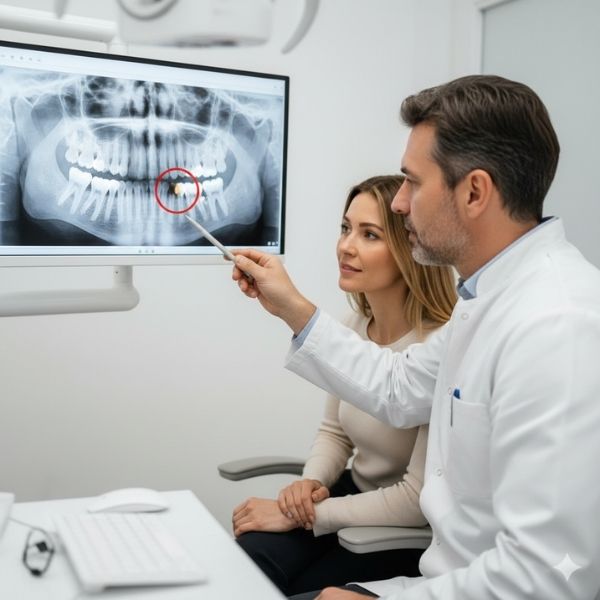
Root canal retreatment is essentially a "do-over" of a previous root canal procedure. Just like retreading a tire means redoing the tire's surface, retreatment means reopening a previously treated tooth, removing old filling materials, cleaning and disinfecting the canal system again, and resealing it properly.
While initial root canal therapy succeeds 85-95% of the time, occasionally teeth develop problems months or even years later. Sometimes the original treatment didn't completely eliminate infection, new decay develops, or the tooth's complex anatomy contained canals that weren't initially treated. Other times, the tooth experiences new trauma or the crown/restoration fails, allowing bacteria to re-enter.
The good news? Retreatment success rates are high—typically 70-80%—and can often save teeth that would otherwise require extraction and replacement with bridges, dentures, or implants.
Root canal retreatment is more complex and typically takes longer than initial treatment, which can trigger significant dental anxiety. At our Ottawa dental clinic, we believe fear should never prevent you from saving a valuable natural tooth.
Mild relaxation helps you stay calm during retreatment. You remain fully aware but comfortable, with effects wearing off within minutes. Good for patients with minimal anxiety.
Learn more about nitrous oxide →Medication taken before your appointment creates deeper relaxation and reduces anxiety significantly. Ideal for moderate anxiety about complex procedures.
Explore oral sedation →Deeper sedation with continuous monitoring throughout treatment. Perfect for lengthy retreatment procedures or high anxiety levels. You'll remember little of the appointment.
Discover IV sedation →Complete unconsciousness with zero awareness, administered by board-certified medical anesthesiologists (Dr. Hesham Talab, MD MSc PhD FRCPC FASE and Dr. Asad Mirghassemi, MD MSc FRCPC). Best for severe dental phobia, complex anatomical challenges, or extended procedures. Hospital-grade safety in our dental clinic.
Learn about general anesthesia →Retreatment typically takes 90-120 minutes. With IV sedation or general anesthesia, you can sleep peacefully through the entire procedure, waking up with the work complete and no memory of the process.
Questions? We're here to help.
Not all root canals require retreatment. Many last a lifetime without problems. However, certain signs indicate your tooth may need retreatment:
Ongoing discomfort or sensitivity, especially when chewing or with temperature changes, suggests incomplete healing or reinfection.
Swelling, pimple-like bumps on gums, or recurring infections indicate bacteria remain in the canal system.
If the crown or filling on a root canal-treated tooth cracks, breaks, or develops decay, bacteria can re-enter the canals.
Routine dental X-rays may reveal bone loss, incomplete healing, or infection at the tooth's root tip—even without symptoms.
If symptoms never completely resolved after initial treatment, or healing was incomplete, retreatment may be necessary.
Sometimes additional root canals or unusual anatomy weren't identified during initial treatment. Advanced imaging can reveal these issues.
Occasionally, endodontic instruments break inside canals during initial treatment. While not always problematic, they sometimes need removal during retreatment.
If the tooth has severe cracks extending below the gum line, extensive bone loss, or root fractures, extraction may be the only option. Your dentist will evaluate whether the tooth is salvageable before recommending retreatment.
Ready to take the next step? Our team is here for you.
Extraction leaves a gap requiring replacement with bridges, implants, or dentures—all more expensive and complex than retreatment.
Natural tooth roots stimulate jawbone, preventing the bone loss that occurs after extraction.
Nothing functions quite like a natural tooth. Retreated teeth chew just as effectively as your other teeth.
While retreatment costs more than initial root canals, it's significantly less expensive than extraction plus tooth replacement options.
Retreatment succeeds in 70-80% of cases—giving your tooth a strong chance at lasting many more years.
Bridges require grinding down healthy adjacent teeth. Retreatment preserves neighboring teeth completely.
Unlike implants (which take 3-6 months) or bridge procedures, retreatment typically requires only one or two appointments with minimal recovery time.
Advanced tools like surgical microscopes, 3D imaging, and ultrasonic instruments significantly improve retreatment success compared to years past.
Root canal retreatment is more complex than initial treatment because we must first remove existing filling materials and restorations. However, modern techniques make the process highly predictable.
We begin with thorough examination and advanced imaging (3D cone beam CT scan if needed) to understand the tooth's anatomy, identify all canals, and assess whether retreatment is likely to succeed. We discuss findings, treatment options, and answer all your questions before proceeding.
We start by administering your chosen sedation option. Once you're comfortable and relaxed (or peacefully asleep with general anesthesia), we numb the tooth area completely.
The dentist carefully removes any crown or filling material covering the tooth. Using specialized ultrasonic instruments and magnification from a surgical microscope, we remove the previous root canal filling material (gutta-percha) from all canals.
We thoroughly clean and disinfect each canal, often discovering additional canals or areas that weren't fully cleaned during initial treatment. Using advanced rotary instruments and irrigation solutions, we eliminate all bacteria and infected tissue.
Once the canals are completely clean and dry, we refill them with new gutta-percha, sealing the tooth against future infection. A temporary filling protects the tooth until you return for a permanent crown.
You may experience mild soreness for a few days as tissues heal. Over-the-counter pain relievers typically provide adequate relief. Follow-up X-rays (typically at 6 months and 1 year, then annually) ensure proper healing and bone regeneration around the root tip.
Call us immediately at (613) 482-0501 if: You experience severe pain not controlled by over-the-counter medication, significant swelling, or if your temporary filling comes out.
Ready to get started?
Root canal retreatment typically costs starting at $1,200-2,000 depending on tooth location and complexity. This is approximately 1.5-2 times the cost of initial root canal therapy due to the additional time, complexity, and advanced techniques required.
Retreatment often provides the best value while preserving your natural tooth.
Most dental insurance plans cover endodontic retreatment at 50-80% when medically necessary. We provide direct billing to major insurance companies and accept the Canadian Dental Care Plan (CDCP).
A good crown after retreatment is essential for long-term success—budget for both the retreatment and crown restoration for best results.
Our patients consistently praise our gentle approach and comfortable root canal experiences.
Read More Reviews on GoogleDentist Referrals Welcome: We collaborate with referring dentists throughout Ottawa and Eastern Ontario for complex endodontic cases and sedation dentistry.
Learn About Our Referral Process