When tooth decay or injury reaches the nerve inside your tooth, root canal therapy eliminates infection, relieves pain, and saves your natural tooth from extraction. At Dental Sedation Ottawa, we specialize in making root canal procedures comfortable and anxiety-free through comprehensive sedation options—from gentle relaxation to complete sleep—so you can receive the care you need without fear or discomfort.
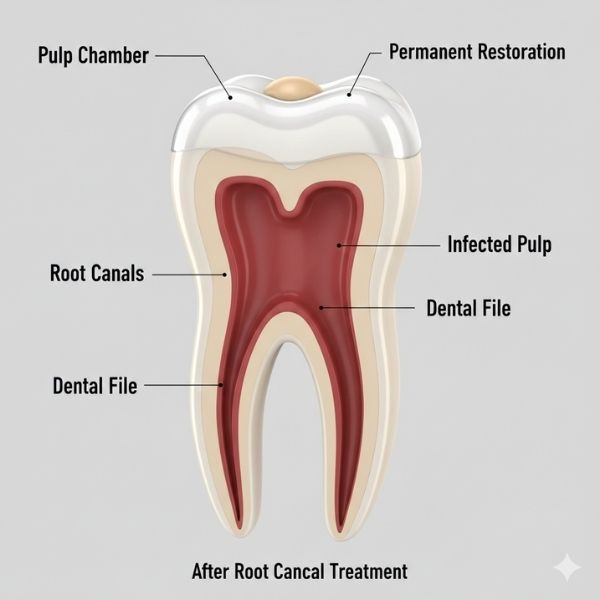
Root canal therapy, also called endodontic treatment, is a procedure that removes infected or damaged tissue from inside a tooth. Think of it as cleaning out the tooth's internal plumbing system. Despite their intimidating reputation, modern root canals are comfortable procedures that save teeth that would otherwise require extraction.
Inside each tooth is a soft tissue called pulp, containing nerves, blood vessels, and connective tissue. When decay or injury allows bacteria to reach this pulp, infection develops, causing pain and potentially forming an abscess. Root canal treatment removes all the infected pulp, disinfects the internal chambers, and seals everything to prevent reinfection.
Root canals have been performed for over a century, though modern techniques, advanced anesthesia, and sedation options have made them remarkably comfortable. Success rates exceed 95% when properly performed. A root canal-treated tooth, when protected with a crown, typically lasts 10-20 years or more—often a lifetime.
At our Ottawa dental clinic, we understand root canals have an unfair reputation for being painful. The truth is, the infected tooth causes pain—the root canal eliminates it. With modern anesthesia and sedation, the procedure itself is comfortable. Whether you need a straightforward root canal or complex treatment, we make comfort our absolute priority.
Mild relaxation for straightforward root canals with minimal anxiety. You stay awake and aware, and effects wear off within minutes. Perfect for most root canal procedures.
Learn more about nitrous oxide →Medication taken before your appointment creates drowsiness and significantly reduces anxiety. Great for moderate nervousness or anxiety about root canals. You'll need someone to drive you home.
Explore oral sedation →Deeper sedation for high dental anxiety or when treating multiple teeth, with continuous monitoring throughout. You'll have little to no memory of the procedure. Ideal for severe dental phobia or complex cases.
Discover IV sedation →Complete sleep with zero awareness, administered by board-certified medical anesthesiologists (Dr. Hesham Talab, MD MSc PhD FRCPC FASE and Dr. Asad Mirghassemi, MD MSc FRCPC). Best for severe dental phobia, special needs patients, or when treating multiple teeth. Hospital-grade safety right in our clinic.
Learn about general anesthesia →With appropriate sedation, especially IV sedation or general anesthesia, we can perform root canals on several teeth in a single appointment. This means one recovery period instead of multiple stressful visits.
Questions? We're here to help.
Root canal therapy becomes necessary when the pulp inside your tooth becomes infected or irreversibly damaged. This can happen through several pathways, but the result is the same—bacteria inside the tooth cause infection that spreads through the root canal system.
When cavities penetrate through enamel and dentin to reach the pulp chamber, bacteria infect the nerve tissue. Initial symptoms might be sensitivity, progressing to constant throbbing pain.
Cracks allow bacteria to reach the pulp even without visible cavities. Sometimes cracks are so fine they're invisible on X-rays, making diagnosis challenging.
A blow to a tooth can damage the nerve even without breaking the tooth. Sometimes symptoms appear immediately; other times nerve death occurs gradually over months or years.
Teeth subjected to multiple fillings or procedures can develop pulp inflammation that progresses to infection, even if the work was properly performed.
Sometimes simply having a very large filling close to the pulp causes chronic inflammation that eventually kills the nerve.
Natural teeth always function better than replacements. Saving your tooth through root canal therapy preserves:
Teeth with vertical root fractures, extensive bone loss, or insufficient remaining tooth structure may not be salvageable even with root canal treatment. In these cases, extraction becomes necessary.
Ready to take the next step? Our team is here for you.
Most root canals can be completed in one appointment lasting 60-90 minutes, though some complex cases require two visits. The procedure has become remarkably streamlined with modern techniques and equipment.
We take X-rays to see the shape of root canals and assess extent of infection. We discuss your sedation options and answer questions. On procedure day, we begin with your chosen sedation method.
We numb the area completely. With proper anesthesia and sedation, you should feel no pain during the procedure—just pressure and vibration. If you feel discomfort at any point, we add more anesthetic immediately.
A rubber dam (small rubber sheet) isolates the tooth, keeping it dry and preventing bacteria from saliva entering the tooth during treatment.
We create a small opening in the top of the tooth (or back surface for front teeth) to access the pulp chamber.
Using specialized instruments and files, we remove all infected pulp tissue from the chamber and root canals. We carefully shape the canals and flush them with disinfecting solutions to kill remaining bacteria. This is the most time-consuming part but is critical for success.
Once completely clean and dry, we fill the root canals with a rubber-like material called gutta-percha, sealing the space to prevent reinfection. The gutta-percha is cemented in place with adhesive.
We place either a temporary filling or permanent filling in the access opening. The tooth typically needs a crown for long-term protection, which is done at a subsequent appointment.
After numbness wears off (2-4 hours), mild soreness for a few days is normal as tissues heal. Over-the-counter pain relievers typically provide adequate relief. Most patients return to normal activities the next day.
Ready to learn more? Schedule a consultation to discuss your options.
Root canal-treated teeth become more brittle over time because they lose their blood supply. Back teeth especially, which handle significant chewing forces, are at risk of fracture without protection. This is why crowns are recommended for almost all root canal-treated teeth—especially molars.
Crowns can be placed immediately after root canal or a few weeks later. We typically recommend placing crowns within 2-3 months to minimize fracture risk. Until then, avoid chewing hard foods on that side.
Front teeth with minimal restoration sometimes don't require crowns if enough natural tooth structure remains. Your dentist advises based on your specific situation.
Once healed and crowned, root canal-treated teeth function normally for years or decades. They require no special care beyond regular brushing, flossing, and dental checkups. Success rates exceed 95% with proper treatment and crown protection.
Single canal
1-2 canals
3-4 canals
Additional
Most dental insurance covers root canals at 50-80% and crowns at 50% as major restorative procedures, with annual maximums typically $1,500-$3,000. We provide direct billing to major insurers and accept the Canadian Dental Care Plan (CDCP).
Comparing Costs: While root canal plus crown might cost $2,000-$3,000, extraction followed by implant replacement typically costs $3,000-$5,000 or more. Saving your natural tooth is usually the most cost-effective option long-term.
Learn about insurance and direct billing →Our patients consistently praise our gentle approach and comfortable root canal experiences.
Read More Reviews on GoogleDentist Referrals Welcome: We collaborate with referring dentists throughout Ottawa and Eastern Ontario for complex root canal cases and dental sedation.
