When a tooth is severely damaged, weakened, or after root canal therapy, a dental crown provides complete protection and restoration. At Dental Sedation Ottawa, we create natural-looking crowns that bring back full function and confidence—all while keeping you comfortable through comprehensive sedation options that eliminate fear and anxiety from the process.
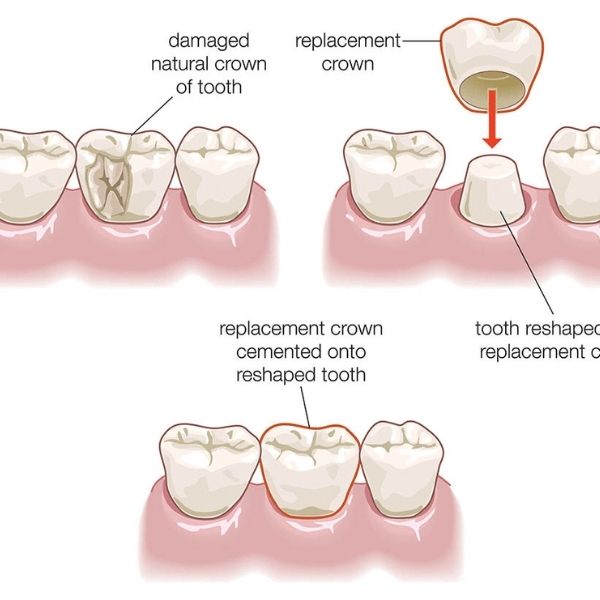
A dental crown is like a protective cap that completely covers a damaged tooth, restoring its shape, strength, and appearance. Think of it as a custom-made helmet that fits over your natural tooth, protecting it from further damage while making it look and function like new.
Crowns are crafted from strong, tooth-colored materials—typically porcelain, ceramic, or porcelain-fused-to-metal—that are carefully shaped and shaded to match your surrounding teeth. When done well, a crown should be virtually undetectable. Most people won't know you have dental work; they'll just see a beautiful, healthy-looking smile.
Modern dental crowns typically last 10-15 years or longer with proper care, making them one of the most durable and reliable restorative treatments available.
Crown procedures involve multiple steps and often multiple appointments, which can trigger dental anxiety. At Dental Sedation Ottawa, we understand these concerns and ensure every crown appointment—from preparation to final placement—can be completed in complete comfort.
Mild relaxation that helps you stay calm during crown preparation and placement. You remain fully aware but comfortable, with effects wearing off within minutes. Learn more about nitrous oxide
Medication taken before your appointment creates drowsiness and significantly reduces anxiety. Ideal for patients nervous about crown procedures. Explore oral sedation
Deeper sedation with continuous monitoring throughout treatment. Perfect for complex crown cases, multiple crowns, or high anxiety levels. Discover IV sedation
Complete unconsciousness with zero awareness, administered by board-certified medical anesthesiologists (Dr. Hesham Talab, MD MSc PhD FRCPC FASE and Dr. Asad Mirghassemi, MD MSc FRCPC). Best for severe dental anxiety, multiple crowns, or complex cases requiring extended time. Hospital-grade safety in our dental clinic. Learn about general anesthesia
With appropriate sedation—especially IV sedation or general anesthesia—we can prepare and temporarily crown multiple teeth in a single appointment. This dramatically reduces the number of visits needed and means only one recovery period instead of several.
Questions? We're here to help.
Dentists recommend crowns when a tooth is damaged beyond what a filling can reliably repair, but the tooth is still worth saving. Crowns protect weakened teeth from breaking and restore full chewing function.
When decay affects multiple tooth surfaces or has hollowed out significant structure, fillings often fail. Crowns provide complete coverage and strength.
Root canal therapy removes the tooth's blood supply, making it brittle. A crown protects the tooth from fracturing during normal chewing.
Teeth broken from injury, grinding, or biting hard objects need crowns to hold the remaining structure together and prevent further cracking.
Years of grinding or acid erosion can wear teeth down significantly. Crowns rebuild lost height and protect remaining tooth structure.
When existing large fillings crack, develop decay around edges, or repeatedly fail, crowns provide more reliable long-term protection.
Crowns can improve severely discolored, misshapen, or poorly positioned teeth when other cosmetic treatments aren't suitable.
Crowns are placed on top of dental implants to replace missing teeth.
When Other Options Work Better: Small to moderate cavities are better treated with fillings or inlays/onlays. Teeth too damaged to save need extraction and replacement with bridges, dentures, or implants.
Ready to take the next step? Our team is here for you.
Modern dental technology offers several excellent materials for dental crowns. We'll recommend the best option based on the crown's location, your bite, aesthetic requirements, and preferences:
A metal base for strength with porcelain layered on top for aesthetics. Very durable and time-tested. Can occasionally show a dark line at the gum line. More affordable than all-ceramic options. Good for back teeth where ultimate aesthetics are less critical.
No metal—just beautiful, translucent ceramic that looks incredibly natural. Excellent for front teeth where aesthetics matter most. Modern ceramics like eMax are quite strong, though not as strong as zirconia. Best color matching to natural teeth.
Extremely strong white ceramic material—the strongest aesthetic option available. Can be layered with porcelain for maximum aesthetics or used solid for maximum strength. Excellent for both front and back teeth. Biocompatible and stain-resistant. Premium option with superior durability and appearance.
Highly durable and conservative of tooth structure. Some patients prefer gold for back teeth due to exceptional longevity. Less aesthetic but unmatched strength and wear properties.
Combination of materials optimizing both strength and aesthetics. For example, zirconia framework with porcelain overlay.
We'll discuss material options during your consultation, considering your specific needs, preferences, and budget. All our materials are high-quality, biocompatible, and designed for long-term success.
Have questions? We'd love to hear from you.
Crown procedures typically require two appointments, though sometimes we can complete everything in one visit depending on the case and available technology.
We begin by administering your chosen sedation option. Once comfortable, we numb the tooth area completely. The dentist then carefully reshapes the tooth, removing damaged portions and trimming all sides to create space for the crown to fit over it. Think of it like trimming a peg to accept a cap.
We take detailed impressions (or digital scans) of the prepared tooth and surrounding teeth. These impressions go to our dental laboratory where skilled technicians hand-craft your custom crown. We carefully select the crown shade to match your natural teeth perfectly.
Before you leave, we place a temporary crown to protect the prepared tooth and maintain appearance and function. This temporary crown may feel slightly different but should work fine for eating and chewing (just avoid very sticky or hard foods).
Typically 2-3 weeks while the laboratory creates your custom crown.
At your return visit, we remove the temporary crown and try in your new permanent crown. We check the fit, bite, appearance, and ask for your approval. Once everything looks and feels perfect, we permanently cement the crown in place and polish it to a natural shine.
With sedation, both appointments are comfortable and anxiety-free. The actual procedures are painless—patients typically describe feeling pressure but no pain.
In some cases, we can complete the entire crown process in one appointment using advanced CAD/CAM technology. We can discuss this option during your consultation.
Ready to get started?
After permanent crown placement, avoid very hard or sticky foods for the first day. Some sensitivity near the gum line is normal for a few days. The crown itself won't be sensitive, but the natural tooth underneath may respond to temperature initially.
With proper care and regular dental checkups every six months, crowns typically last 10-15 years. Many patients get 20+ years from high-quality crowns. Signs a crown may need replacement include:
Regular checkups allow us to monitor crown condition and address any problems early. If a crown does fail prematurely, we can often repair or replace it before the underlying tooth suffers damage.
Call us immediately at (613) 482-0501 if: Your crown feels loose, falls off, or if you experience persistent pain or sensitivity.
Ready to take the next step? Our team is here for you.
| Crown Type | Typical Cost |
|---|---|
| Porcelain-fused-to-metal | $1,200-1,600 |
| All-ceramic (porcelain) | $1,400-1,800 |
| Zirconia (premium) | $1,500-2,000 |
| Same-day CAD/CAM crown | $1,400-1,800 |
Most dental insurance plans cover crowns at 50% when medically necessary. We provide direct billing to major insurance companies and accept the Canadian Dental Care Plan (CDCP).
While crowns represent a significant investment, consider that quality crowns last 10-15+ years and prevent tooth loss. The alternative—extraction followed by bridge, denture, or implant—typically costs more and involves more extensive treatment. Many patients find crowns provide the best long-term value for protecting damaged teeth.
Our patients consistently rate us 5 stars for gentle, anxiety-free care. Read verified patient experiences on Google.
View All Reviews on GoogleDentist Referrals Welcome: We collaborate with referring dentists throughout Ottawa and Eastern Ontario for complex crown cases and sedation dentistry.
