Custom night guards protect your teeth from the damaging effects of grinding and clenching while you sleep. At Dental Sedation Ottawa, we create precisely fitted night guards that prevent tooth wear, jaw pain, and headaches—and we can accommodate anxious patients through sedation options during the fitting process to ensure everyone receives this essential protection.
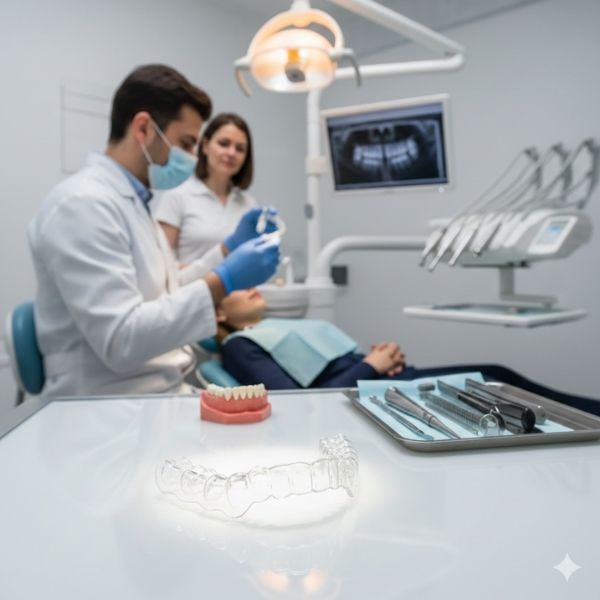
Bruxism—the medical term for teeth grinding and jaw clenching—affects an estimated 8-16% of adults and up to 30% of children. Many people grind their teeth unconsciously during sleep, completely unaware they're doing it until a dentist points out the telltale wear patterns or a partner complains about the noise. Others clench their jaw during the day, especially during stressful situations or concentrated work.
The forces involved in bruxism are remarkable and destructive. While normal chewing generates about 40 pounds of pressure per square inch, grinding can produce 250+ pounds of force—equivalent to having a 250-pound person standing on your tooth. Night after night, this excessive force wears down tooth enamel (which doesn't regenerate), cracks teeth, loosens dental work, inflames jaw joints, and causes chronic pain.
Left untreated, bruxism leads to serious consequences: flattened, fractured, or chipped teeth; worn enamel exposing sensitive inner layers; loose teeth; damaged fillings, crowns, or bridges requiring expensive repairs; temporomandibular joint (TMJ) disorders causing jaw clicking, locking, and chronic pain; chronic headaches and migraines; facial muscle soreness; and even changes in facial appearance from overdeveloped jaw muscles.
The good news: a custom night guard provides simple, effective protection. This thin plastic appliance worn during sleep acts as a cushion between upper and lower teeth, absorbing grinding forces and preventing damage. Think of it as a shock absorber for your teeth and jaw.
Questions? We're here to help.
At our Ottawa dental clinic, we understand that dental impressions can trigger anxiety—especially in patients with sensitive gag reflexes or past uncomfortable experiences. We make the night guard fitting process comfortable through modern techniques and sedation options when needed.
Mild relaxation perfect for patients with minimal anxiety or gag reflex concerns. You stay fully awake, breathe normally, and effects wear off within minutes. Ideal for impression-taking.
Learn more about nitrous oxide →Medication taken before your appointment creates drowsiness and reduces anxiety significantly. Great for moderate dental fear or pronounced gag reflex.
Explore oral sedation →Deeper sedation for high anxiety or when combining night guard fitting with other dental treatment. Continuous monitoring ensures safety.
Discover IV sedation →Complete sleep with zero awareness, administered by board-certified medical anesthesiologists (Dr. Hesham Talab, MD MSc PhD FRCPC FASE and Dr. Asad Mirghassemi, MD MSc FRCPC). Best for severe dental phobia or special needs patients. Hospital-grade safety right in our clinic.
Learn about general anesthesia →We can combine your custom night guard fitting with dental exams, cleanings, and any other preventive or restorative care in one comfortable sedated appointment—maximizing efficiency and minimizing anxiety.
Ready to learn more? Schedule a consultation today.
Many people don't realize they grind their teeth until significant damage occurs. Recognizing the warning signs helps you seek protection before irreversible harm develops.
If you experience any of these symptoms, schedule an evaluation. Your dentist can examine your teeth for wear patterns and assess jaw joint function to determine if you'd benefit from a night guard.
Experiencing grinding symptoms? Schedule an evaluation today.
Teeth grinding and clenching stem from multiple factors, often working in combination. Understanding causes helps address underlying issues while protecting teeth from damage.
Addressing contributing factors—through stress management, sleep disorder treatment, medication adjustment, or dental corrections—may reduce grinding. However, even with underlying cause treatment, many patients continue grinding to some degree. A night guard provides essential protection regardless of cause.
Concerned about teeth grinding? Let us evaluate your symptoms and recommend the right protection.
Pharmacies and online retailers sell "boil-and-bite" or one-size-fits-all night guards for $20-80. While tempting from a cost perspective, these over-the-counter options provide significantly inferior protection, comfort, and durability compared to professionally made custom night guards.
The difference parallels prescription eyeglasses versus drugstore reading glasses. Both help you see, but only one is precisely calibrated to your unique needs. For protecting an investment of $50,000+ in dental work over your lifetime, custom protection makes obvious sense.
Ready to learn more? Schedule a consultation today.
We create different types of custom night guards based on grinding severity, jaw problems, and personal preferences.
Rigid, durable material ideal for severe grinders. Provides maximum protection against heavy forces. Typically made for upper teeth. Most common type recommended by dentists. Lasts 5-10 years with proper care.
Best for: heavy grinders, severe tooth wear, jaw clenchers.
Cushioned, flexible material offering comfort for mild grinding. Gentler on gums and more comfortable for first-time wearers. Usually recommended for lower teeth. Less durable—lasts 1-2 years typically.
Best for: mild grinders, temporary protection, patients sensitive to hard materials.
Combines soft interior (comfort) with hard exterior (durability and protection). Offers excellent balance of comfort and protection. Lasts 3-5 years typically.
Best for: moderate grinders, patients wanting comfort without sacrificing protection.
Small appliance covering only front teeth, preventing back teeth from touching. Reduces grinding by limiting jaw muscle engagement. Requires specific fitting by trained dentist. FDA-approved for migraine prevention related to bruxism.
Best for: tension headaches, TMJ pain, patients who can't tolerate full-coverage guards.
Your dentist recommends the most appropriate type based on your grinding patterns, existing tooth damage, jaw joint health, and comfort preferences. Many patients try soft guards first, then upgrade to hard acrylic as they adapt to nighttime appliance wear.
Not sure which type is right for you? We'll recommend the best option for your needs.
Custom night guard fabrication involves precision dental work and professional laboratory craftsmanship, resulting in a perfectly fitted protective appliance unique to your mouth.
Your first appointment includes a comprehensive evaluation of your teeth, bite relationship, jaw joints, and existing damage from grinding. The dentist examines wear patterns, takes photos documenting current tooth condition, and discusses your symptoms and grinding history. This assessment determines which night guard type best suits your needs.
Next, the dentist takes detailed impressions of your upper and lower teeth using dental putty or digital scanning technology. These impressions capture every contour, ridge, and detail of your unique dental anatomy. The process takes 3-5 minutes and, while sometimes uncomfortable for patients with sensitive gag reflexes, is facilitated by our sedation options.
The dentist also records your bite relationship—how your upper and lower teeth fit together—ensuring your night guard positions your jaw correctly. Proper bite registration is crucial for TMJ protection and comfort.
Your impressions and bite registration go to our professional dental laboratory where skilled technicians pour stone models of your teeth. Using these precise models, they fabricate your custom night guard through vacuum forming, pressure molding, or traditional acrylic buildup—depending on the type prescribed.
After 1-2 weeks, you return for your fitting appointment. The dentist carefully adjusts the guard, checking that it seats fully, stays secure, doesn't interfere with breathing, and positions your bite appropriately. We teach you insertion and removal techniques, care instructions, and answer any questions. Follow-up adjustments are common as you adapt to wearing the appliance.
Time Required: First visit (exam and impressions) 30-45 minutes; fitting visit 20-30 minutes.
Ready to protect your teeth?
Most patients adapt to wearing a night guard within 1-2 weeks, though the process varies individually. Understanding what to expect helps you persist through the adjustment period and achieve consistent protection.
Call us if you experience persistent pain, difficulty breathing, gagging, or extreme discomfort—adjustments usually resolve these issues. Never try to adjust the guard yourself with tools or heat, as this damages the precise fit.
Proper care extends your custom night guard's lifespan and ensures optimal hygiene and protection for years.
Bring your night guard to every dental appointment for professional evaluation. Your dentist checks for wear patterns indicating areas of heavy grinding, assesses whether adjustment is needed, and determines when replacement is necessary.
Need your night guard checked or adjusted? We're here to help.
Custom night guard lifespan varies based on material type, grinding severity, and care quality:
5-10 years
(severe grinders may need replacement sooner)
3-5 years
1-2 years
Regular replacement represents essential maintenance, not optional upgrading. A worn-out night guard provides inadequate protection, potentially allowing damage to continue. Given the thousands of dollars in dental work a night guard prevents, periodic replacement is a wise investment.
While protecting teeth from grinding damage is the primary goal, night guard wearers often experience surprising additional benefits:
Many patients report feeling more rested, experiencing fewer headaches, and noticing reduced jaw pain within weeks of consistent night guard use. The overall quality of life improvement often exceeds expectations focused solely on tooth protection.
Custom night guards typically cost $300-600 depending on type, materials, and laboratory fees. While this exceeds drugstore options, consider the alternative: fixing one cracked tooth requiring a crown costs $1,200-2,000. Replacing worn enamel with full-mouth rehabilitation can cost $20,000-50,000. A $400 night guard protecting your teeth for 5-10 years represents remarkable value.
Most dental insurance plans cover custom night guards at 50-80% (typically one guard every 2-5 years). Some insurers require documentation of bruxism diagnosis or evidence of tooth damage for coverage approval. We provide direct billing to major insurers and accept the Canadian Dental Care Plan (CDCP) for eligible patients.
For patients without insurance, flexible payment plans make custom night guards accessible. When you consider the long-term cost of not protecting your teeth—crowns, root canals, implants, and chronic pain treatment—the investment in a custom night guard pays for itself many times over.
Ready to protect your smile? Schedule your night guard consultation today.
Our patients consistently rate us 5 stars for gentle, anxiety-free care. We're proud to have earned hundreds of positive reviews from families across Ottawa.
Read verified patient experiences on Google
View All Reviews on GoogleDentist Referrals Welcome: We collaborate with referring dentists throughout Ottawa and Eastern Ontario for dental sedation cases.
Learn About Our Referral Process