When you need dental implants in your upper back jaw but your sinus cavity hangs too low, a sinus lift procedure creates the necessary bone height for successful implant placement. This specialized bone grafting technique has revolutionized implant treatment for the upper jaw. At Dental Sedation Ottawa, we make sinus lift surgery completely comfortable through comprehensive sedation options, so you can build the foundation for your new teeth without anxiety.
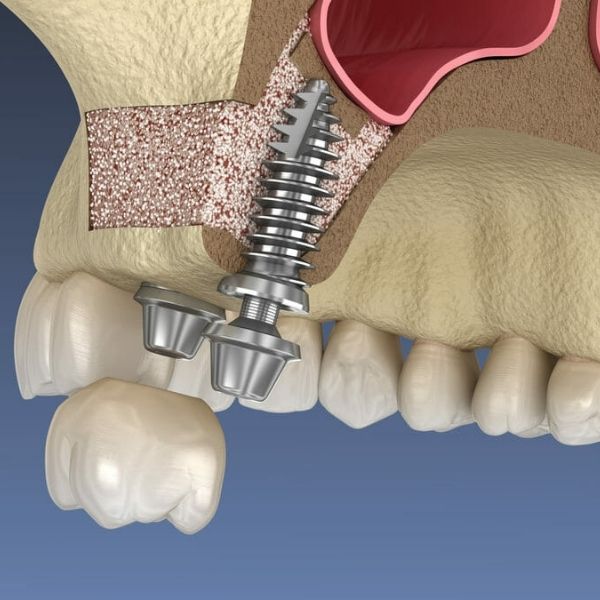
Your maxillary sinuses are air-filled spaces located above your upper back teeth. These sinuses sit surprisingly close to the roots of your upper premolars and molars—sometimes with only a thin layer of bone separating your tooth roots from the sinus cavity.
When you lose upper back teeth, two problems occur simultaneously: the bone in that area begins to deteriorate from lack of stimulation, and the sinus cavity naturally expands downward into the space where bone used to be. Within a few years, there may be insufficient bone height remaining to support dental implants—the sinus hangs so low that standard-length implants would puncture into the sinus cavity.
A sinus lift (also called sinus augmentation or sinus elevation) solves this problem by gently raising the sinus membrane upward and placing bone graft material in the newly created space underneath. As this graft heals over 4-6 months, new bone forms, increasing the height available for implant placement.
Sinus lifts have been performed successfully since the 1970s and are now routine procedures with success rates exceeding 95%. Modern techniques and materials make them more predictable and comfortable than ever before.
Sinus lift surgery is a more involved procedure than simple bone grafting, which naturally creates anxiety for patients. At our Ottawa dental clinic, we ensure you're completely comfortable throughout using comprehensive sedation options.
While available, nitrous oxide alone is rarely sufficient for sinus lift procedures due to their technical nature and length.
Learn more about nitrous oxide →Can be combined with IV sedation for enhanced relaxation, though typically not used alone for sinus lifts.
Explore oral sedation →Deep sedation through an IV line creates a twilight state with little to no memory of the procedure. Many patients choose this option for sinus lift surgery.
Discover IV sedation →Complete sleep with zero awareness, administered by board-certified medical anesthesiologists (Dr. Hesham Talab, MD MSc PhD FRCPC FASE and Dr. Asad Mirghassemi, MD MSc FRCPC). Hospital-grade safety monitoring throughout. This is a popular choice for sinus lift cases, especially when bilateral (both sides) or when combined with implant placement.
Learn about general anesthesia →Sinus lift surgery typically takes 60-90 minutes per side under sedation. Bilateral procedures (both sinuses) take 90-150 minutes. While this sounds lengthy, you'll be comfortably sedated or asleep throughout with no awareness of time passing.
Questions? We're here to help.
Two main techniques are used for sinus lifts, chosen based on how much bone height you currently have.
This is the most common technique, used when you have minimal bone height remaining (typically less than 5mm).
Procedure: We make an incision in your gum and create a small window in the side wall of your sinus. The sinus membrane is gently detached and lifted upward like raising a window shade. Bone graft material is packed into the space created underneath the elevated membrane. The gum is closed with sutures.
This less invasive approach is used when you have moderate bone height remaining (typically 5-7mm) and need only modest augmentation.
Procedure: We approach through the implant site itself (from the top of the ridge) rather than through a side window. Special instruments gently push up the sinus floor and the graft material is inserted through this access point.
We determine which approach is appropriate based on 3D cone beam CT scans showing your exact bone dimensions and sinus anatomy.
Have questions? We'd love to hear from you.
Not everyone getting implants in the upper back jaw needs a sinus lift—it depends on your specific anatomy and how much bone remains.
Many patients are surprised to learn they need sinus lifts because they aren't experiencing any symptoms. The sinus expansion and bone loss happen gradually and painlessly. We identify the need through detailed 3D cone beam CT imaging during your consultation.
Active sinus infections must be treated before surgery. Chronic allergies or sinusitis don't automatically disqualify you but require careful evaluation. We may work with your physician or ENT specialist to optimize sinus health before proceeding.
Smoking dramatically reduces success rates for sinus lifts—the graft material relies on good blood supply for healing, and smoking impairs circulation. We strongly recommend quitting before and during healing.
Ready to take the next step? Our team is here for you.
While the technical details vary between lateral and internal approaches, here's what you can expect:
We provide detailed pre-operative instructions: medications to take or avoid, fasting requirements for IV sedation or general anesthesia, and arranging transportation home. You'll receive prescriptions for post-operative medications including antibiotics (particularly important for sinus procedures), pain relievers, anti-inflammatory drugs, and nasal decongestants.
Sedation and Anesthesia: We establish your chosen sedation level. Local anesthesia completely numbs the surgical area. You'll experience zero pain.
Incision and Access: We make a precise incision in your gum over the upper back teeth area, exposing the bone.
Window Creation: Using specialized instruments or rotary tools, we carefully create a small oval window in the outer wall of the sinus, about the size of a large grape.
Membrane Elevation: This is the most delicate step. The sinus membrane (Schneiderian membrane) is gently separated from the bone and pushed upward into the sinus cavity. We work carefully to avoid tearing this membrane, though small tears can usually be repaired if they occur.
Graft Placement: Bone graft material is packed into the space created underneath the elevated membrane. Depending on how much height we need to create, we may use 1-3 cubic centimeters of graft material per side.
Membrane Barrier: We often cover the window with a collagen membrane to protect the graft and guide healing.
Implant Placement (Sometimes): If you have at least 4-5mm of existing bone for initial stability, we may place implants during the same procedure. They extend up into the grafted area. If there's insufficient bone for implant stability, implants are placed 4-6 months later after the graft heals.
Closure: The gum tissue is carefully repositioned and sutured closed to protect the surgical site.
The approach is through the top of the ridge (where the implant will go) rather than a side window. The technique is less invasive but can only elevate the sinus floor a limited amount (typically 2-4mm). Implants are usually placed simultaneously with internal sinus lifts.
Ready to learn more? Schedule a consultation to discuss your options.
Proper post-operative care is crucial for sinus lift success—the graft material needs time to integrate and the sinus membrane must remain undisturbed.
Expect moderate swelling and possibly bruising around your cheeks and under your eyes. This peaks at 48-72 hours then gradually subsides. We provide pain medication, antibiotics, anti-inflammatory drugs, and nasal decongestants. Most patients take 3-5 days off work.
Ice packs applied for 20 minutes on, 20 minutes off during the first 48 hours significantly reduce swelling.
Swelling resolves and surgical sites begin healing. You can gradually resume normal activities but continue avoiding nose blowing and activities that create significant sinus pressure (like scuba diving, playing wind instruments, or flying in unpressurized aircraft).
Your body incorporates the graft material and forms new bone in the augmented area. This happens invisibly—you won't feel it occurring. The graft gradually transforms from soft graft material into solid, living bone capable of supporting implants.
Follow-up X-rays and examination verify adequate bone formation. If implants weren't placed during sinus lift surgery, you're now ready for implant placement. The new bone functions exactly like your original bone—providing stable support for implants in your upper back teeth area.
Lateral window sinus lifts succeed in 95%+ of cases. Internal sinus lifts succeed in 90%+ of cases. The most common complication is membrane perforation during surgery, which can usually be repaired immediately without affecting outcomes.
Have questions? We'd love to hear from you.
Upper back teeth handle substantial chewing forces and are critical for proper function. Sinus lifts make implant restoration possible in this important area.
Without adequate bone height, implants simply aren't possible in the upper back jaw. Sinus lifts create the necessary foundation.
Upper back teeth are essential for grinding and chewing food properly. Implants in this area restore approximately 70% of natural chewing power.
Many patients can avoid removable partial dentures by getting implants in the upper back teeth—dramatically improving comfort and quality of life.
Building bone prevents the sunken cheek appearance that develops when upper back teeth are missing long-term.
Properly grafted bone supports implants that can last 20-30+ years.
Modern sinus lift techniques are highly successful when performed correctly and post-operative instructions are followed.
Sinus lift surgery costs reflect the procedure's technical complexity and the need for specialized materials and expertise.
Window approach
Both sinuses
Per site
These costs are in addition to implant placement and restoration costs. The total investment for implant-supported teeth in the upper back jaw including sinus lift, implants, and crowns typically ranges from $6,000-$10,000 per tooth.
Insurance Coverage: Many dental insurance plans cover 50% of medically necessary sinus lift surgery when it's required for implant success. We provide direct billing to major insurers and can help you understand your specific benefits before treatment. We also accept the Canadian Dental Care Plan (CDCP) for eligible patients.
Cost-Benefit Perspective: While sinus lift adds significant expense and time to treatment, it's often the only way to achieve stable, long-lasting implants in the upper back jaw. The alternative—avoiding the area entirely and using removable partial dentures—delivers dramatically inferior function and often costs more over time due to constant adjustments and replacements.
Learn more about insurance and direct billing →Our patients trust us for complex procedures with excellent outcomes.
Read More Reviews on GoogleDentist Referrals Welcome: We collaborate with referring dentists throughout Ottawa and Eastern Ontario for dental sedation cases.
Learn About Our Referral ProcessSinus lift surgery creates the bone height needed for successful implants in your upper back teeth. With our sedation options, the procedure is comfortable and stress-free. Schedule your consultation today.
