Losing a single tooth creates more problems than just a gap in your smile. It affects your ability to chew properly, can cause neighboring teeth to shift out of position, and leads to bone loss in your jaw. A single tooth dental implant offers the most natural, permanent solution—one that protects your healthy teeth and prevents future complications. At Dental Sedation Ottawa, we specialize in making implant procedures completely comfortable through comprehensive sedation options—from mild relaxation to complete sleep—so you can restore your smile without fear or anxiety.
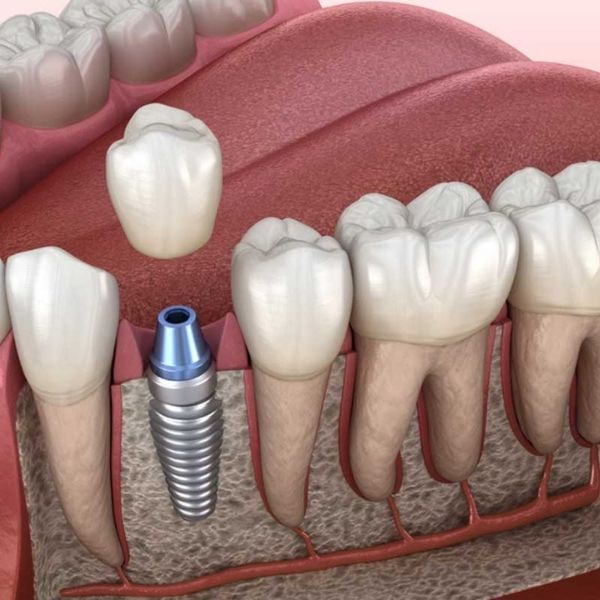
A single tooth implant is a three-part system that replaces one missing tooth from root to crown. Think of it as building a new tooth from the ground up. The titanium implant post acts as an artificial root, surgically placed into your jawbone. Over several months, your bone naturally fuses with this post through a process called osseointegration. Once integrated, we attach a small connector called an abutment, then top it with a custom-made crown that matches your natural teeth perfectly.
Unlike a dental bridge—which requires grinding down the two healthy teeth on either side of the gap—an implant stands independently. Your healthy teeth remain untouched. Unlike a partial denture that sits on your gums and can shift or cause discomfort, an implant becomes a permanent part of your jaw. It looks, feels, and functions exactly like the tooth you lost.
Single tooth implants have been used successfully for over 50 years with a 95-98% long-term success rate. When properly cared for through regular brushing, flossing, and dental checkups, they can last a lifetime. Only the crown may eventually need replacement after 10-15 years of normal wear—but the implant itself rarely fails.
Ready to learn more? Schedule a consultation today.
At our Ottawa dental clinic, we believe no one should experience fear or pain during dental implant surgery. Whether you have mild nervousness or severe dental anxiety, we make comfort our absolute priority through comprehensive sedation dentistry options.
Mild relaxation perfect for straightforward single-implant placements. You stay awake, feel calm and comfortable, and effects wear off within minutes so you can drive yourself home.
Learn more about nitrous oxide →Medication taken about an hour before your appointment creates drowsiness and significant anxiety reduction. You'll remain responsive but deeply relaxed throughout the procedure. Great for moderate anxiety.
Explore oral sedation →Deeper sedation with medications administered directly into your bloodstream, allowing us to adjust comfort levels throughout the procedure. Most patients have little to no memory of the treatment. Ideal for significant anxiety or complex cases requiring bone grafting.
Discover IV sedation →Complete sleep with zero awareness, administered by board-certified medical anesthesiologists (Dr. Hesham Talab, MD MSc PhD FRCPC FASE and Dr. Asad Mirghassemi, MD MSc FRCPC). Best for severe dental phobia, patients with special needs, or those who simply want to sleep through the procedure. Hospital-grade safety and monitoring right in our clinic.
Learn about general anesthesia →In many cases, especially for front teeth, we can extract your damaged tooth, place the implant, and attach a temporary crown all in one appointment under sedation. You'll leave with a complete smile—never experiencing a visible gap.
Questions? We're here to help.
A single missing tooth might seem like a minor problem, but the consequences compound over time. You're likely a good candidate for a single tooth implant if:
Untreatable decay, fractures below the gum line, or accidents resulting in tooth loss all leave you with a gap that affects both function and appearance.
Sometimes even after root canal therapy, teeth develop persistent infections or fractures that make extraction necessary.
Congenitally missing teeth (never developed) leave permanent gaps that implants can fill naturally.
Teeth with severe bone loss from gum disease, extensive internal fractures, or root resorption eventually need removal—implants provide the best replacement.
Bridges eventually fail (typically after 10-15 years), and partial dentures can be uncomfortable or damage surrounding teeth. Implants offer a permanent upgrade.
Even one missing tooth triggers a chain reaction. Neighboring teeth drift into the empty space, creating bite problems and increasing cavity risk. The opposing tooth (the one that used to bite against your missing tooth) begins to over-erupt, causing jaw joint problems. Without a root to stimulate it, the underlying jawbone gradually dissolves away—up to 25% bone loss in the first year alone. This bone loss can eventually affect your facial appearance and make future implant placement more difficult.
Ready to take the next step? Our team is here for you.
A bridge requires grinding down the two healthy teeth adjacent to your gap, removing significant tooth structure to create crowns that support a false tooth in between.
A removable partial denture clips onto nearby teeth to hold a false tooth in place.
A single tooth implant stands independently without affecting neighboring teeth.
For most patients, the implant's superior long-term outcomes justify the higher initial investment. While a bridge might cost less upfront, when you factor in replacement costs over 20-30 years, implants often prove more economical.
Questions? We're here to help.
The single tooth implant process typically unfolds over 4-6 months, allowing for proper healing and bone integration:
We examine your mouth, take detailed 3D cone beam CT scans to assess bone quality and quantity at the implant site, discuss your goals and expectations, review your medical history, and explain sedation options. We'll show you exactly what your new tooth will look like and create a timeline with costs clearly outlined. If you need a tooth extracted, we'll discuss whether immediate implant placement (same appointment) is possible.
If your tooth hasn't already been lost, we'll need to remove it before or during implant placement. Under your chosen sedation, extraction typically takes 20-30 minutes. In many cases, especially if bone is healthy, we can place the implant immediately after extraction—eliminating one healing period and reducing total treatment time by several months.
If bone quantity or quality is insufficient, we add grafting material to create a strong foundation. Minor grafts can often be done during extraction or implant placement. Larger grafts may require 4-6 months of healing before implant placement.
Under your chosen sedation, we surgically place the titanium implant post into your jawbone through a small incision in your gum. The procedure takes 45-90 minutes. We close the gum tissue over or around the implant. For visible front teeth, we often place a temporary crown the same day so you never have a gap. For back teeth, a healing period with no visible tooth is common.
Your bone naturally grows around and fuses with the implant. Lower jaw implants typically integrate in 3-4 months; upper jaw implants take 4-6 months due to softer bone. During this period, you'll have either a temporary crown or a small healing cap barely visible above the gum line. You can eat normally on the other side of your mouth.
Once integration is complete, we attach a small connector called an abutment to the implant. This minor procedure usually requires only local anesthesia. The abutment protrudes through your gum and will support your final crown.
We take precise impressions and digital scans of your mouth. A skilled lab technician fabricates your custom crown, carefully matching the color, shape, and translucency of your natural teeth. We cement or screw-attach the crown to the abutment. Your new tooth is designed to blend seamlessly with your smile.
Total Time: Typically 4-6 months from start to finish. With immediate implant placement and immediate temporary crown, you can have a complete-looking smile from day one.
Have questions about the procedure?
Your single tooth implant requires the same care as your natural teeth:
With proper care, single tooth implant success rates exceed 95% at 10 years and remain excellent even at 20+ years. The crown will show normal wear over time and may need replacement after 10-15 years, but the implant itself rarely fails once successfully integrated.
Titanium root replacement
Connector piece
Custom restoration
Complete treatment
If needed
By type selected
Most dental insurance covers 50% of the crown restoration up to annual maximums. Some plans provide partial implant coverage. We provide direct billing to major insurers and accept the Canadian Dental Care Plan (CDCP) for eligible patients.
Long-Term Value: While a single tooth implant costs more upfront than a bridge, when you factor in the 20-30 year lifespan and no damage to adjacent teeth, implants typically prove more economical over time.
Financing Options: We offer flexible payment plans to make treatment accessible.
Learn about insurance and direct billing →Our patients love their results and the comfortable experience we provide.
Read More Reviews on GoogleDentist Referrals Welcome: We collaborate with referring dentists throughout Ottawa and Eastern Ontario for dental implant and sedation cases.
Learn About Our Referral ProcessA single tooth implant protects your healthy teeth, prevents bone loss, and gives you a permanent, natural-looking replacement. With our sedation options, the procedure is comfortable and stress-free. Schedule your consultation today.
