When you lose teeth, your jawbone begins to deteriorate in those areas—sometimes to the point where there isn't enough bone left to support dental implants. Bone grafting rebuilds and strengthens your jaw, creating the necessary foundation for successful, long-lasting implants. At Dental Sedation Ottawa, we make bone grafting procedures completely comfortable through comprehensive sedation options, so you can restore your bone health without anxiety.
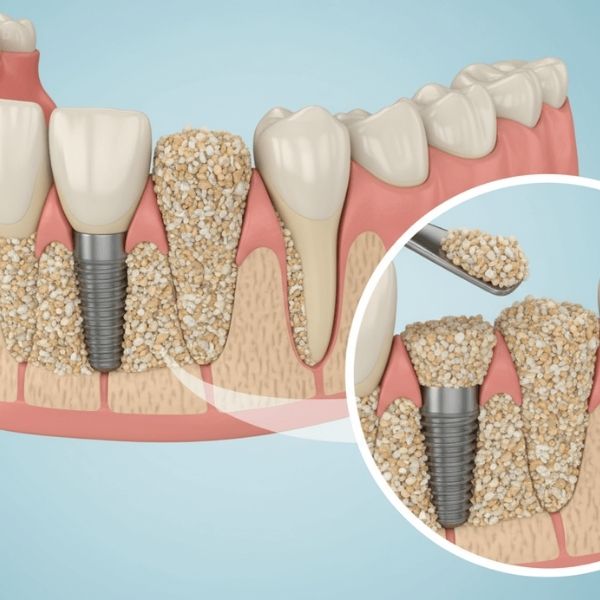
Your jawbone needs stimulation from tooth roots to maintain its density and volume. When teeth are missing, the bone in that area receives no stimulation and gradually dissolves away—a process called bone resorption. Within the first year after tooth loss, you can lose 25% or more of the bone width in that area. The deterioration continues over time, creating serious challenges for implant placement.
Dental implants require adequate bone in three dimensions—height, width, and density—to achieve stability and long-term success. Think of it like building a house: you need a solid foundation. An implant placed in insufficient bone is like trying to anchor a fence post in loose sand—it simply won't be stable.
Bone grafting solves this problem by rebuilding bone volume before or during implant placement. Modern bone grafting techniques are highly successful and predictable, with success rates exceeding 90%. While grafting adds time to your overall treatment (typically 4-6 months of healing), it dramatically improves long-term implant success.
The good news: bone grafting technology has advanced tremendously. What once required harvesting bone from your hip or skull can now often be accomplished with simpler materials and techniques. And with appropriate sedation, the procedure is far more comfortable than most patients expect.
Ready to learn more? Schedule a consultation today.
Bone grafting involves surgical access to your jawbone, which understandably creates anxiety for many patients. At our Ottawa dental clinic, we ensure you're completely comfortable throughout the procedure using comprehensive sedation options.
Mild relaxation for simple, minor grafting procedures in patients with minimal anxiety. You remain fully conscious.
Learn more about nitrous oxide →Medication taken before your appointment significantly reduces anxiety. Suitable for moderate nervousness or less extensive grafting.
Explore oral sedation →Deeper sedation through an IV line creates a twilight state with little to no memory of the procedure. Ideal for extensive grafting or moderate to high anxiety.
Discover IV sedation →Complete sleep with zero awareness, administered by board-certified medical anesthesiologists (Dr. Hesham Talab, MD MSc PhD FRCPC FASE and Dr. Asad Mirghassemi, MD MSc FRCPC). Hospital-grade safety monitoring. Best for major bone grafting procedures, severe dental fear, or when combining grafting with other procedures like extractions or implant placement.
Learn about general anesthesia →Most bone grafting procedures take 30-90 minutes depending on the extent of grafting needed. Under appropriate sedation, you'll be comfortable throughout with no awareness of the procedure.
Questions? We're here to help.
Bone grafting isn't one-size-fits-all. We use various techniques and materials depending on your specific situation.
When we extract a tooth, the empty socket immediately begins shrinking. Socket preservation grafting involves placing bone graft material into the extraction socket right after removing the tooth. This preserves the bone volume and width, preventing the collapse that would otherwise occur.
Best for: Patients planning implants in the future who want to prevent bone loss from the start
Timeline: Heals in 3-4 months, then ready for implant placement
When bone loss has already occurred and the jaw ridge is too narrow or too short for implants, we need to build it up. We place bone graft material along the deficient ridge, cover it with a protective membrane, and allow new bone to grow.
Best for: Patients with moderate to significant bone loss who need dimension restored before implant placement
Timeline: Heals in 4-6 months, then ready for implant placement
This specialized procedure addresses bone loss in the upper back jaw where the sinus cavity hangs low. We gently lift the sinus membrane and place bone graft material underneath, creating adequate bone height for implants in that area.
Best for: Patients getting implants in the upper back teeth area with insufficient vertical bone height
Timeline: Heals in 4-6 months, then ready for implant placement
Learn more about sinus lift surgery →For severe bone loss throughout the jaw (often from years of denture wear, trauma, or disease), extensive reconstruction may be needed. This might involve larger sections of grafting or harvesting bone from another site in your body.
Best for: Complex cases with significant bone deficiency
Timeline: May require staged procedures over 6-12 months
Have questions? We'd love to hear from you.
Several types of bone graft materials are used, each with specific advantages.
Bone harvested from another location in your body—typically your chin, back jaw, or (rarely) hip. This is considered the "gold standard" because it's your own living bone with cells that actively form new bone.
Advantages: Highest success rates, no risk of rejection, actively forms new bone
Disadvantages: Requires second surgical site; more post-operative discomfort
Processed bone from human tissue banks, thoroughly sterilized and tested. The processing removes cells but preserves the bone scaffold structure that your body can fill in with new bone.
Advantages: No second surgical site needed; readily available; excellent results
Disadvantages: Slightly lower success rates than autograft; some patients uncomfortable with donor tissue
Processed bone from animal sources (typically bovine), sterilized and treated to remove organic components, leaving only the mineral structure.
Advantages: No second surgical site; very safe; good scaffold for new bone formation
Disadvantages: Takes longer to incorporate than autograft
Man-made bone substitute materials, typically calcium phosphate or hydroxyapatite compounds that mimic natural bone mineral structure.
Advantages: No second surgical site; no concerns about donor tissue; readily available
Disadvantages: Variable success rates depending on specific material used
We select the most appropriate graft material based on the size of the defect, location, your preferences, and specific clinical factors. For most routine implant-related bone grafting, allograft or xenograft materials work excellently and avoid the need for a second surgical site.
Ready to take the next step? Our team is here for you.
While specific techniques vary by the type of grafting needed, the fundamental process follows these steps.
We provide detailed pre-operative instructions: medications to take or avoid, fasting requirements if using IV sedation or general anesthesia, and arranging transportation home. You'll receive prescriptions for post-operative medications (pain relievers, antibiotics, anti-inflammatory drugs).
We begin by establishing your chosen sedation. Local anesthesia is administered to completely numb the surgical area. You'll experience zero pain.
We make precise incisions in your gum tissue to expose the bone that needs grafting.
The bone surface is cleaned and prepared to receive the graft material. Any infected or damaged tissue is removed. Bone graft material is carefully placed in the deficient area. The amount used depends on how much bone needs rebuilding.
In many cases, we cover the graft with a special membrane that protects it and guides bone regeneration. Some membranes dissolve naturally; others are removed during implant placement. We carefully reposition the gum tissue over the graft and place sutures to protect the area during healing.
In many cases, we can combine bone grafting with other procedures in one appointment: tooth extraction + socket preservation grafting, implant placement + simultaneous grafting around implant, multiple extractions + ridge preservation grafting. This approach minimizes the number of appointments and reduces overall treatment time.
Procedure Duration: Simple socket preservation: 15-30 minutes • Single-site ridge grafting: 30-60 minutes • Multiple-site grafting: 60-120 minutes • Major reconstruction: 2+ hours
Ready to get started?
Proper post-operative care ensures optimal healing and graft success.
Expect swelling, minor bleeding, and discomfort for 3-5 days. The more extensive the grafting, the more swelling you'll experience. We provide pain medication and anti-inflammatory drugs. Most patients take 2-3 days off work.
Ice packs applied for 20 minutes on, 20 minutes off during the first 24-48 hours significantly reduce swelling.
Sutures are typically removed after 10-14 days.
As swelling subsides and surgical sites close, your body begins the remarkable process of incorporating the graft material and forming new bone. This happens invisibly—you can't feel it occurring—but over 4-6 months, living bone replaces or integrates with the graft material.
Once your bone has regenerated adequately (verified with X-rays and clinical examination), you're ready for implant placement. The new bone functions exactly like your original bone—providing a stable, strong foundation for implants.
Success Indicators: We look for adequate bone volume on X-rays, firm bone on clinical examination, healthy gum tissue, and no signs of infection or graft failure. Success rates for routine bone grafting procedures exceed 90% when post-operative instructions are followed carefully.
Have questions? We'd love to hear from you.
Not everyone getting implants needs bone grafting, but many do—especially if teeth have been missing for years.
We determine this during your consultation using 3D cone beam CT scans that show bone dimensions precisely. Sometimes the bone loss is obvious visually; other times it's only apparent on advanced imaging.
Medical Considerations: Certain conditions require careful evaluation—uncontrolled diabetes, bisphosphonate medications (for osteoporosis), previous radiation to the jaw, or active cancer treatment. We work closely with your physicians to determine the safest approach.
Single tooth
Per site
Per site
Complex cases
These costs are in addition to implant placement and restoration costs.
Insurance Coverage: Many dental insurance plans cover 50% of medically necessary bone grafting when it's required for implant success. We provide direct billing to major insurers and can help you understand your specific benefits. We also accept the Canadian Dental Care Plan (CDCP) for eligible patients.
Cost-Benefit Perspective: While grafting adds expense and time, attempting to place implants in inadequate bone leads to failure—which means losing your investment and needing corrective procedures that cost even more. Proper grafting when needed provides the foundation for long-term implant success.
Our patients consistently rate us 5 stars for gentle, anxiety-free care. Read verified patient experiences on Google.
View All Reviews on GoogleDentist Referrals Welcome: We collaborate with referring dentists throughout Ottawa and Eastern Ontario for dental sedation cases.
Learn About Our Referral ProgramBone grafting creates the solid foundation your dental implants need for long-term success. With our sedation options, the procedure is comfortable and stress-free. Schedule your consultation today.
