White spots on teeth can be embarrassing and distracting, making an otherwise healthy smile look flawed. At Dental Sedation Ottawa, we offer multiple proven techniques to remove or blend white spots—from minimally invasive microabrasion to advanced resin infiltration and cosmetic bonding—all with sedation options available to ensure a completely comfortable, anxiety-free experience.
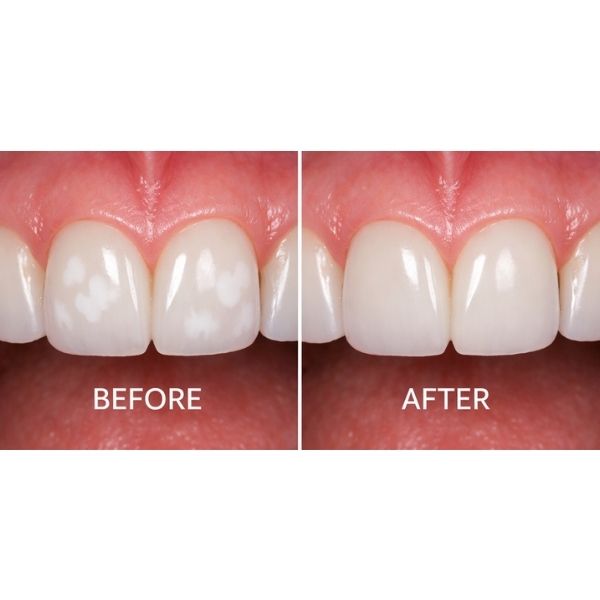
White spots on teeth—also called white lesions, hypoplasia, or decalcification—are areas where tooth enamel has a different color or texture than surrounding tooth structure. These chalky white or cream-colored patches typically appear on front teeth and can significantly affect smile aesthetics, even when teeth are otherwise healthy.
Unlike stains that discolor teeth darker (yellow, brown, or gray), white spots result from enamel that didn't develop properly or has lost minerals, creating areas with different light-reflecting properties than healthy enamel. The spots can range from barely noticeable to very prominent, depending on severity and location.
Fluorosis: Excess fluoride exposure during tooth development (ages 0-8) causes enamel to form with white spots, streaks, or mottling. Mild fluorosis creates small white spots; severe cases show brown discoloration. This is permanent enamel alteration, not damage that occurred after teeth erupted.
Decalcification (Demineralization): When bacteria produce acids that dissolve minerals from enamel, white spots form as the first sign of tooth decay. This commonly occurs with poor oral hygiene, especially around braces. Unlike fluorosis, these spots are actually weakened areas that may progress to cavities if not treated.
Enamel Hypoplasia: Developmental defects during tooth formation create enamel that's thinner or improperly formed, appearing as white or cream-colored patches. Causes include childhood illness, malnutrition, trauma to baby teeth, or genetic conditions. The affected enamel is structurally weaker than normal.
Trauma: Injury to baby teeth can affect permanent teeth developing underneath, causing white spots when they eventually erupt. The trauma disrupts normal enamel formation in that specific area.
Important: White spots don't respond to traditional teeth whitening—in fact, whitening often makes them more noticeable by brightening surrounding enamel while spots stay the same. Specialized treatments are needed to remove or camouflage them effectively.
Ready to learn more? Schedule a consultation today.
Most white spot removal procedures are minimally invasive and cause little to no discomfort. However, for patients with dental anxiety or when combining white spot treatment with other cosmetic work, we offer comprehensive sedation options.
Mild relaxation that makes treatment more pleasant and helps time pass quickly. You remain fully aware but calm. Perfect for microabrasion or resin infiltration procedures that take 30-60 minutes. Effects wear off within minutes so you can drive home immediately.
Learn more about nitrous oxide →Prescribed medication taken before your appointment creates moderate drowsiness and reduces anxiety. Ideal when combining white spot removal with other procedures (like bonding on multiple teeth or whitening) or for patients with moderate dental anxiety. You'll need someone to drive you home.
Explore oral sedation →For patients undergoing comprehensive smile makeovers where white spot treatment is one component among several procedures, IV sedation allows completion of all work in a single deeply relaxed appointment. Most patients remember little to nothing.
Discover IV sedation →Complete sleep administered by our board-certified medical anesthesiologists (Dr. Hesham Talab, MD MSc PhD FRCPC FASE and Dr. Asad Mirghassemi, MD MSc FRCPC) is available for severe dental phobia or extensive cosmetic rehabilitation. Hospital-grade safety in our comfortable clinic.
Learn about general anesthesia →With appropriate sedation, we can treat white spots on multiple teeth and complete additional cosmetic work (whitening, bonding, veneers) in a single appointment—eliminating repeated visits and anxiety.
Questions? We're here to help.
We offer several proven techniques for white spot removal, each with specific advantages. The best choice depends on white spot severity, location, and your goals and budget.
What it is: Microabrasion uses a mildly acidic paste combined with gentle polishing to remove the outer layer of enamel containing white spots. Think of it as extremely controlled, precise sanding that removes just the discolored superficial enamel.
Best for:
The procedure involves applying the microabrasion paste to affected areas and using a special handpiece to gently abrade the surface for 30-60 seconds per tooth. We rinse, evaluate, and repeat 3-5 times until spots diminish or disappear. The process removes approximately 0.1-0.2mm of enamel—negligible amount that doesn't weaken teeth.
Advantages: Highly conservative, no bonding materials that could stain later, permanent results, typically completed in one appointment.
Limitations: Only works on superficial spots. Deep white spots won't respond. Some cases show improvement but not complete resolution.
What it is: Icon or similar resin infiltration systems use liquid resin that penetrates porous white spot enamel, filling the spaces and making the area blend with surrounding tooth color. The resin hardens inside the enamel, essentially "erasing" the white spot appearance.
Best for:
The procedure involves: applying special gel to open enamel pores, rinsing, drying thoroughly, applying liquid infiltration resin that soaks into white spot, light-curing to harden resin, and polishing. Treatment takes 30-60 minutes per tooth.
Advantages: No drilling required, preserves natural tooth structure, results often match surrounding enamel remarkably well, single-appointment treatment.
Limitations: Works best on specific types of white spots (post-braces decalcification responds best). Fluorosis white spots sometimes respond less predictably. Results vary—some spots disappear completely, others improve significantly but remain slightly visible.
What it is: Tooth-colored composite resin is applied over white spots to cover and camouflage them. We lightly roughen the surface, then layer composite matching your tooth color over the affected area.
Best for:
Bonding involves minimal enamel preparation, application of bonding adhesive, careful layering and sculpting of composite resin, light-curing to harden, and polishing to natural sheen. Takes 30-60 minutes per tooth.
Advantages: Predictable, complete coverage guaranteed regardless of spot severity. Can simultaneously fix other cosmetic concerns. Cost-effective compared to veneers.
Limitations: Bonding material requires maintenance, may stain over years, typically lasts 3-7 years before replacement needed. More invasive than microabrasion or infiltration.
What it is: Ultra-thin ceramic shells permanently bonded to front teeth, completely covering white spots while also perfecting color, shape, and alignment.
Best for:
Veneers require two appointments: tooth preparation and temporary placement, then final veneer bonding 1-2 weeks later.
Advantages: Guaranteed perfect appearance, addresses all cosmetic issues simultaneously, longest-lasting solution (10-20 years), stain-proof and incredibly natural-looking.
Limitations: Most expensive option, requires permanent tooth alteration, significant financial investment ($1,200-2,000 per tooth).
We often combine techniques for optimal results. For example: microabrasion to reduce spot severity, followed by resin infiltration to blend remaining discoloration, and strategic bonding if needed for complete camouflage. This staged approach minimizes intervention while maximizing results.
Ready to take the next step? Our team is here for you.
We examine your white spots closely under magnification, photograph them, and evaluate their cause, depth, and severity. We discuss your aesthetic goals and budget. We may take X-rays to rule out underlying decay if spots resulted from demineralization. Based on evaluation, we recommend the most appropriate treatment option(s) and show you clinical photos of similar cases we've treated, so you understand realistic expected outcomes.
We review results and make any minor adjustments needed. We provide care instructions and discuss maintenance.
Realistic Outcomes: Treatment success varies based on white spot cause and severity. Here's what to expect with each method:
All spot types: 100% coverage regardless of severity
All spot types: 100% coverage with comprehensive smile transformation
Most patients achieve significant improvement with conservative treatments (microabrasion and/or infiltration). When spots remain partially visible, strategic bonding can complete the camouflage. The goal is minimum intervention for maximum aesthetic improvement.
Prevention of New White Spots: If white spots resulted from poor oral hygiene or diet, improving habits prevents new spots on other teeth. We provide guidance on fluoride use, brushing technique, and dietary changes to protect your smile long-term.
White spots from post-braces decalcification respond excellently to resin infiltration. Mild fluorosis responds well to microabrasion or infiltration. Trauma-related spots and mild hypoplasia typically improve significantly with conservative treatments.
Severe fluorosis with deep discoloration may require bonding or veneers for complete coverage. Extensive enamel hypoplasia often needs restorative treatment (bonding or veneers) rather than just infiltration. Very old decalcification spots (decades old) sometimes show limited improvement with conservative methods.
We honestly assess your specific situation during consultation and recommend the approach most likely to succeed—whether that's conservative treatment, more aggressive restoration, or combination therapy.
Per treatment
Per tooth
Per tooth
Per tooth
Most dental insurance plans provide minimal coverage for cosmetic white spot removal. However, when white spots resulted from decay (demineralization), insurance may cover treatment as cavity prevention.
We provide direct billing to major insurance carriers and accept the Canadian Dental Care Plan (CDCP) for eligible patients where applicable.
Cost-Benefit Considerations: While white spot removal is elective, the confidence improvement many patients experience makes it highly valuable. Spots that have caused self-consciousness for years can often be dramatically improved with conservative, affordable treatments. Starting with microabrasion or infiltration makes sense—if results are excellent, you've achieved your goal affordably. If results are partial, bonding or veneers remain available options.
Our patients consistently rate us 5 stars for gentle, anxiety-free care. Read verified patient experiences on Google.
View All Reviews on GoogleDentist Referrals Welcome: We collaborate with referring dentists throughout Ottawa and Eastern Ontario for cosmetic sedation cases.
Learn About Our Referral Program